Quick answer
Babies can eat apple from around 6 months, once they're showing signs of readiness for solids.
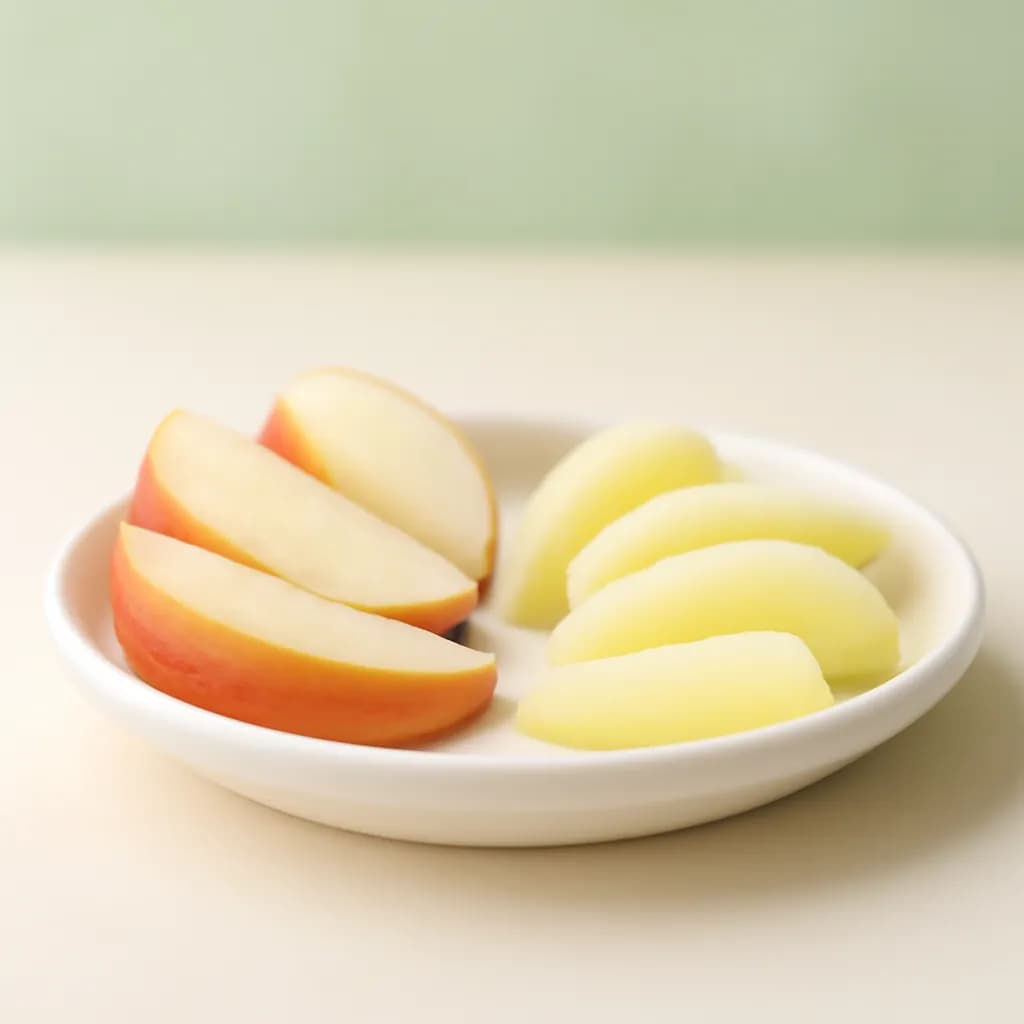
For baby-led weaning, apples are best cooked until soft (steamed, baked, or stewed) or offered in thin, soft-cooked wedges. Sweet, mild varieties like Gala, Fuji, or Pink Lady are gentle first choices.
Apple is naturally sweet and very rarely allergenic, which makes it an easy, well-accepted introduction to fruit - as a smooth purée for spoon-feeding or soft strips for self-feeding.
When babies can eat apple
Babies can eat apple from around 6 months, once they're showing signs of readiness for solids.
Raw apple - including hard chunks and thick round slices - is a choking hazard for young children, so cook apple until soft or grate it finely; offer thin, softened peel-on strips only for older, confident eaters.
Apple is high in fibre, including pectin, which can help firm up loose stools; very large amounts of apple or apple juice can have the opposite effect, so offer it as part of a varied diet.
See our first foods for baby guide for more ideas.
Nutritional benefits for babies
- 💚Fibre, including pectin (a soluble fibre) - supports healthy digestion and gut bacteria.
- 💚Vitamin C - supports the immune system and helps the body absorb iron from other foods.
- 💚Antioxidants (polyphenols) - concentrated in and just under the skin, supporting overall health.
- 💚Naturally sweet - appeals to babies and helps with accepting fruits and vegetables when combined.
- 💚High water content - hydrating and gentle on a developing tummy.
- 💚Very low allergy risk - one of the easiest fruits to introduce.
How to serve apple for babies
6–9 months (puree): Steam or stew peeled, cored apple until very soft, then blend smooth. Combine with cinnamon (no sugar), pear, or oatmeal for variety.
6–9 months (BLW): Offer thick, soft-cooked wedges or strips your baby can hold. Leave a little peel on one edge for grip, but make sure the flesh squashes easily.
9–12 months: Smaller soft-cooked pieces as the pincer grasp develops, or coarsely grated raw apple folded into yoghurt or porridge (grating makes raw apple easier to manage).
12+ months: Soft raw apple matchsticks or thin slices once chewing is well established - still avoid large hard chunks. Baked apple, and apple in muffins or pancakes, work well.
How to cut apple for BLW
For safe shapes and sizes by age, see our detailed How to cut apple for BLW guide.
Also check how to cut food for baby-led weaning for general BLW cutting tips.
Apple recipes for babies
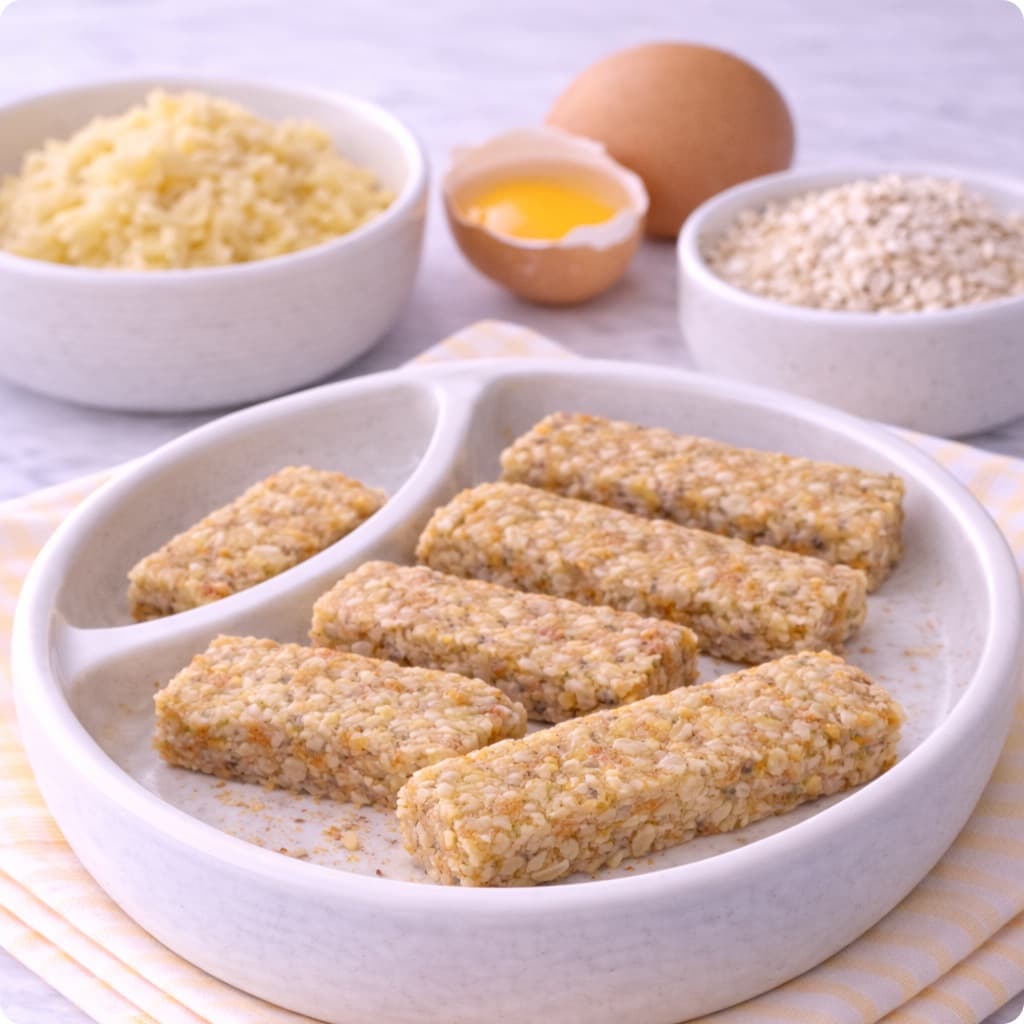
Apple Oat BLW Bars
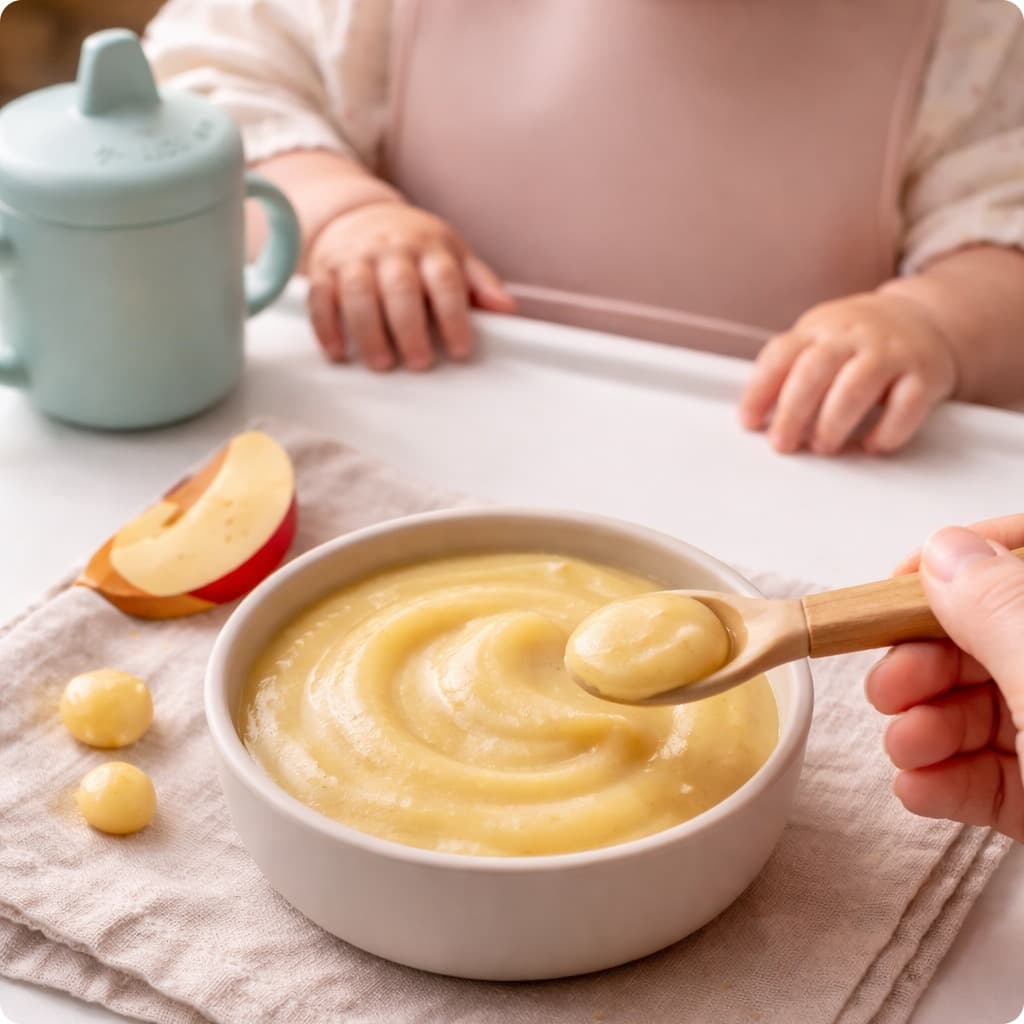
Apple Purée
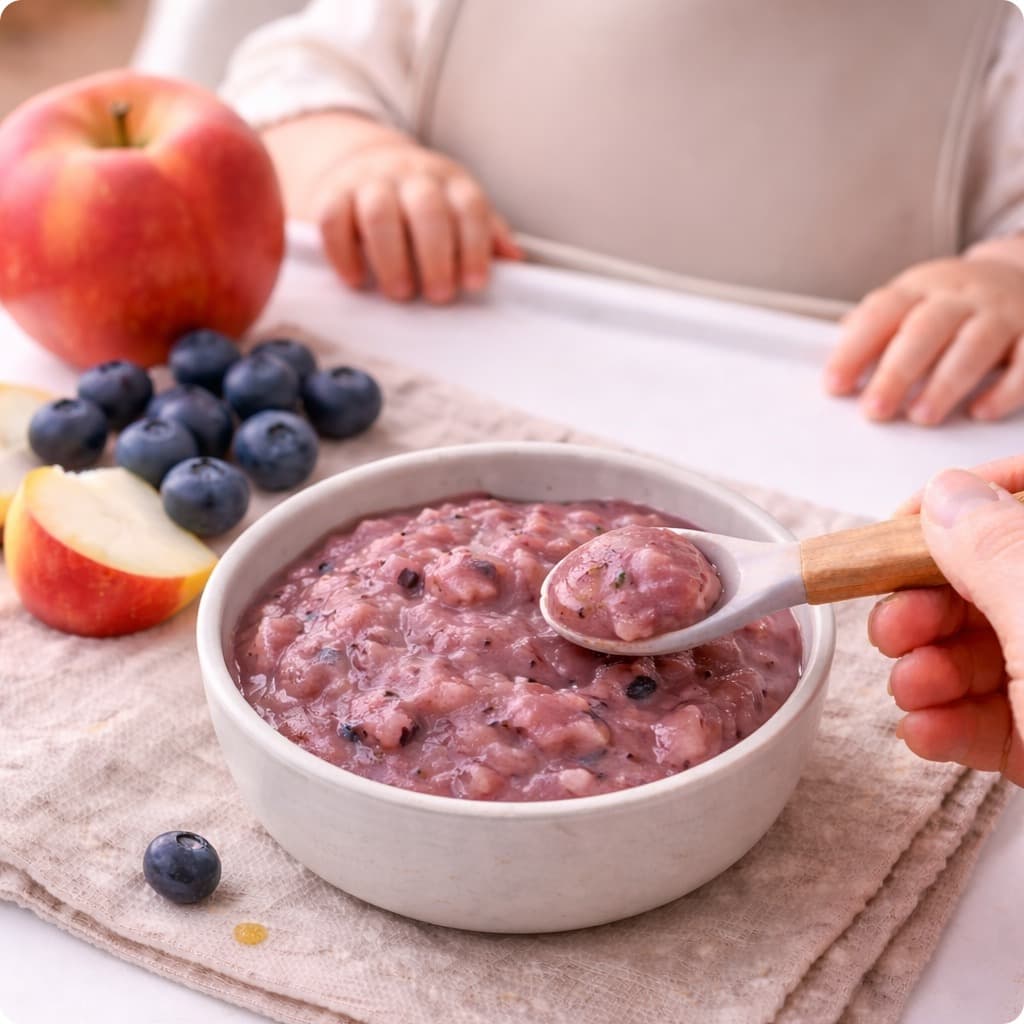
Apple & Blueberry Mash
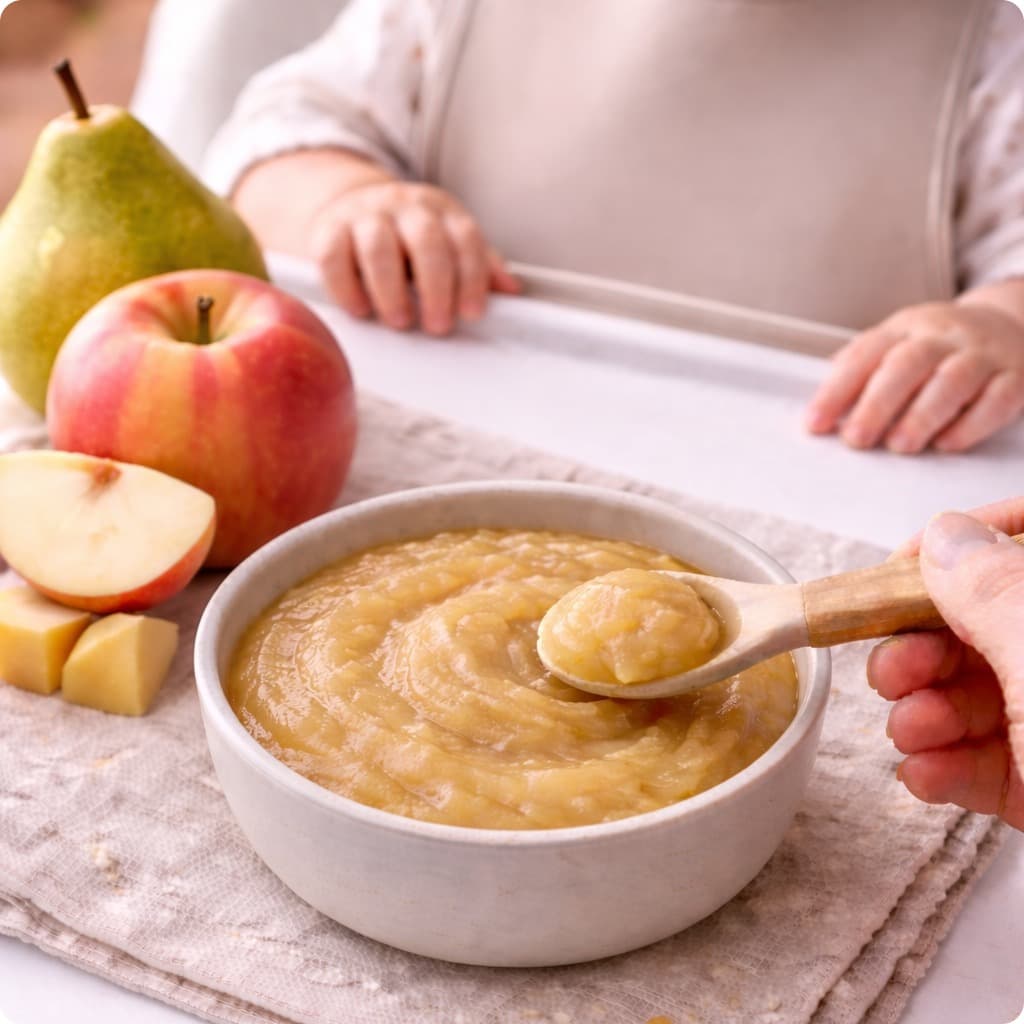
Apple & Pear Mash
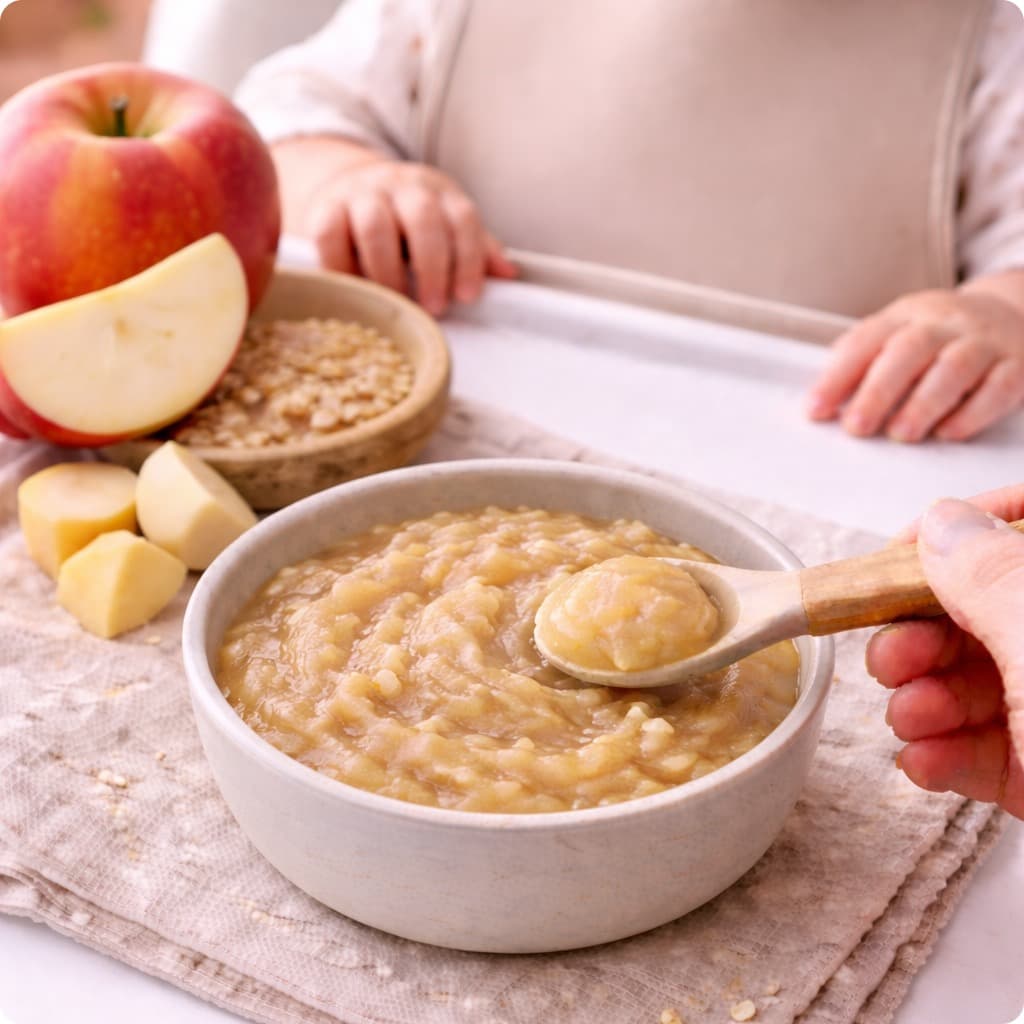
Apple Oatmeal
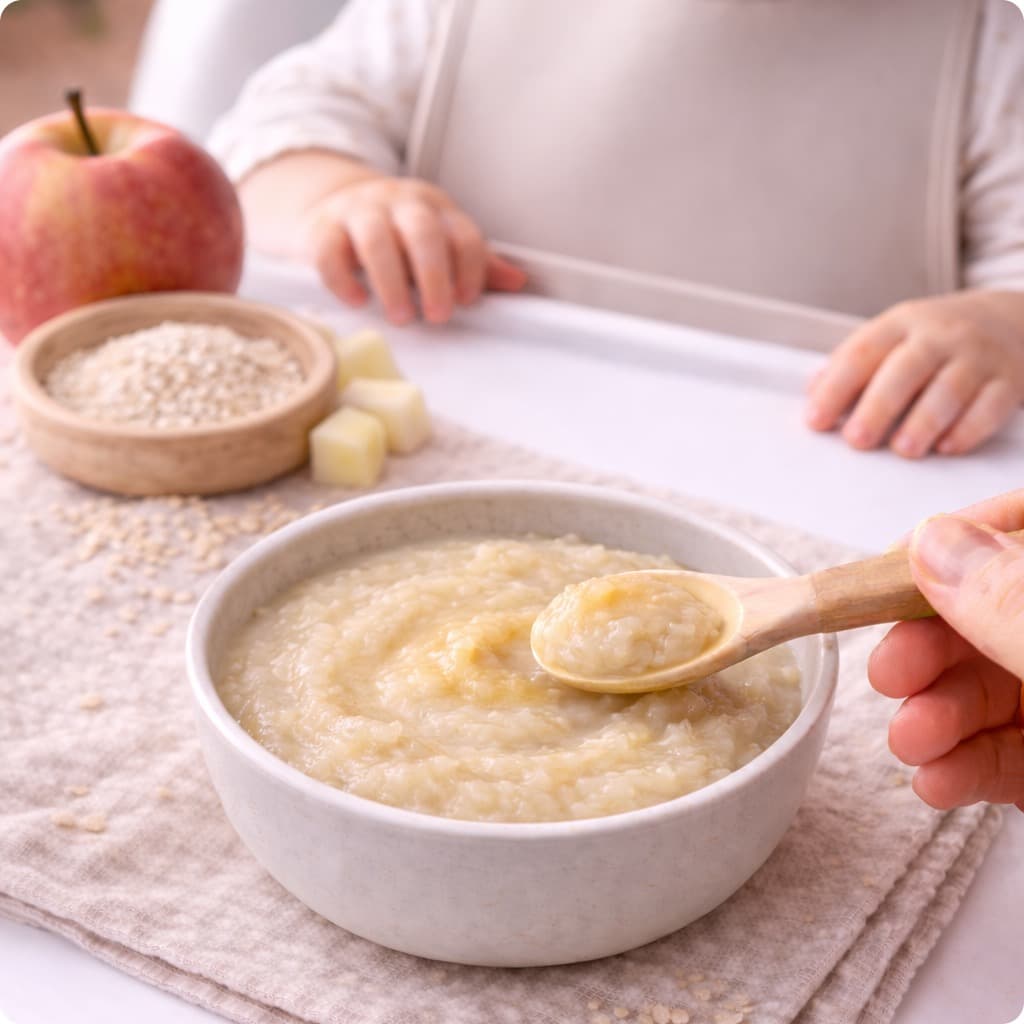
Apple Rice Cereal
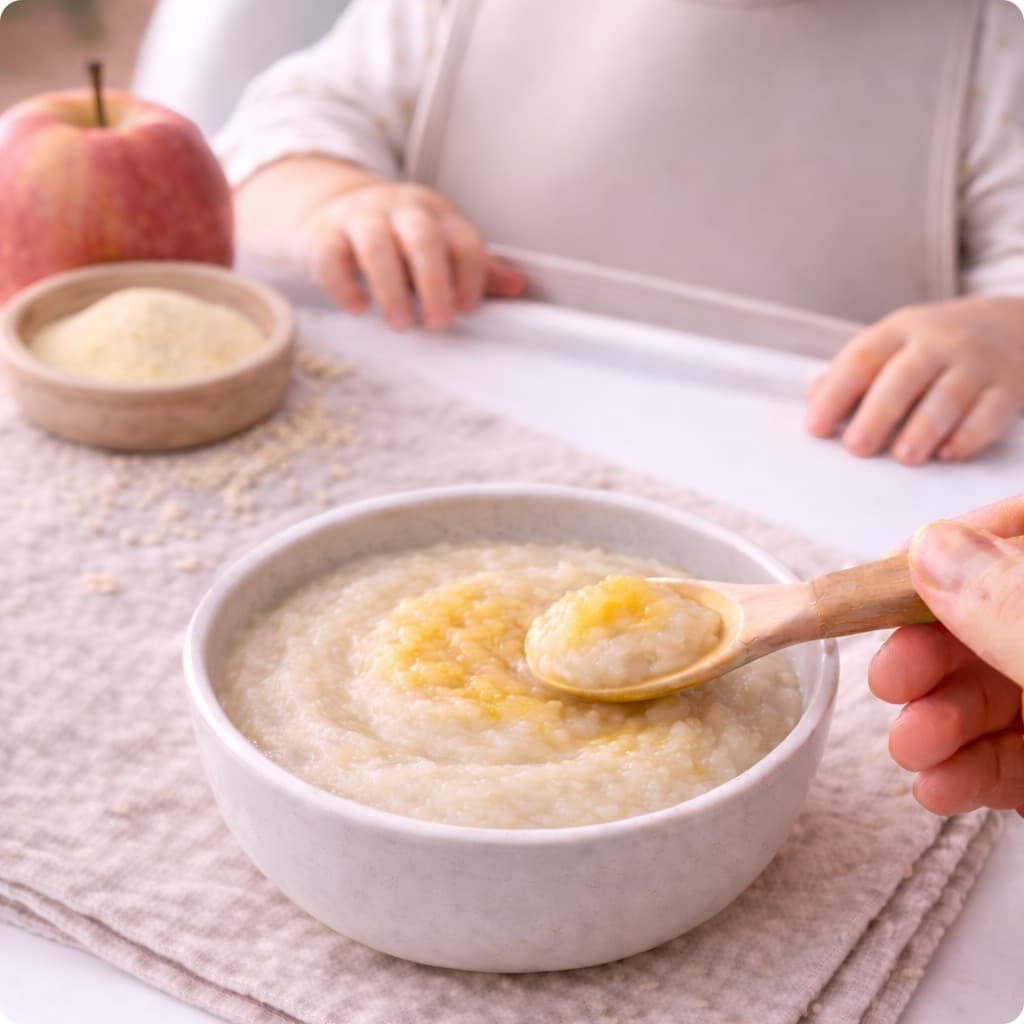
Semolina Porridge
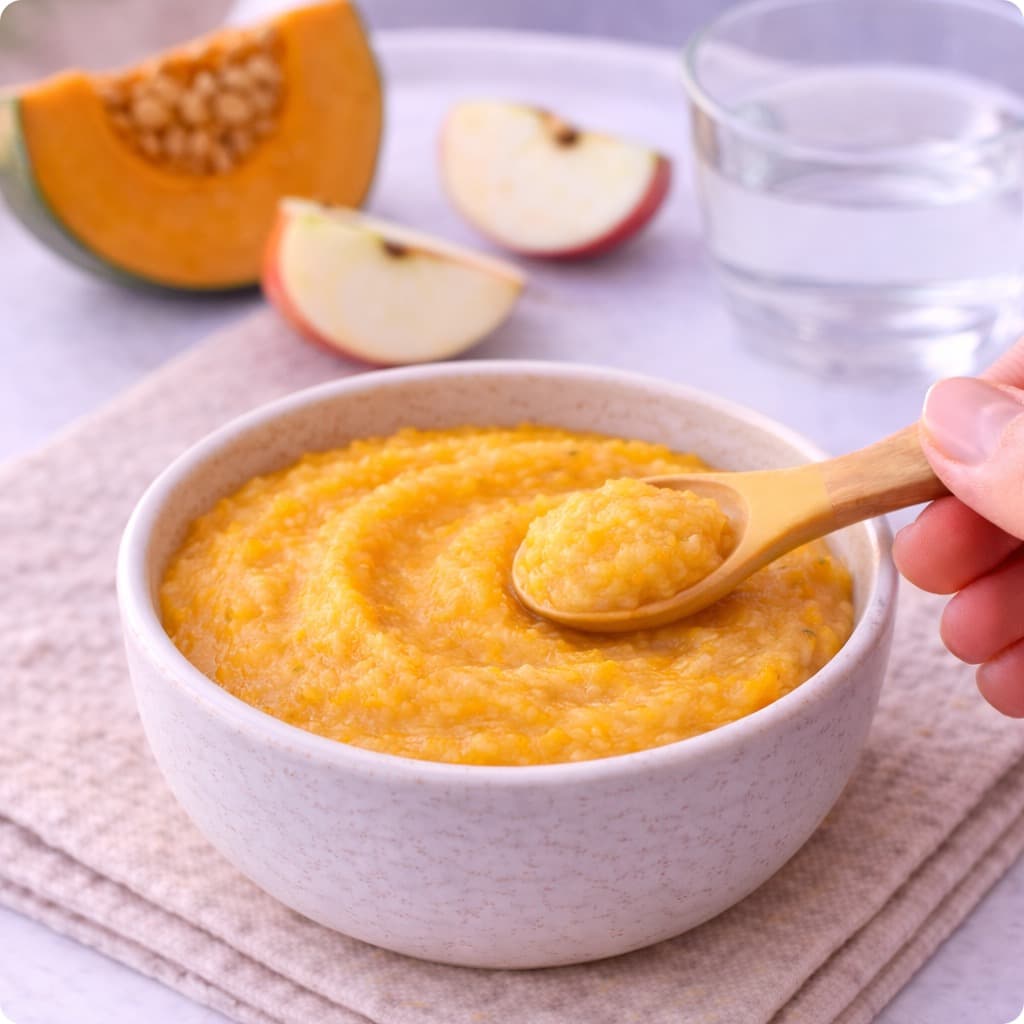
Pumpkin & Apple Mash
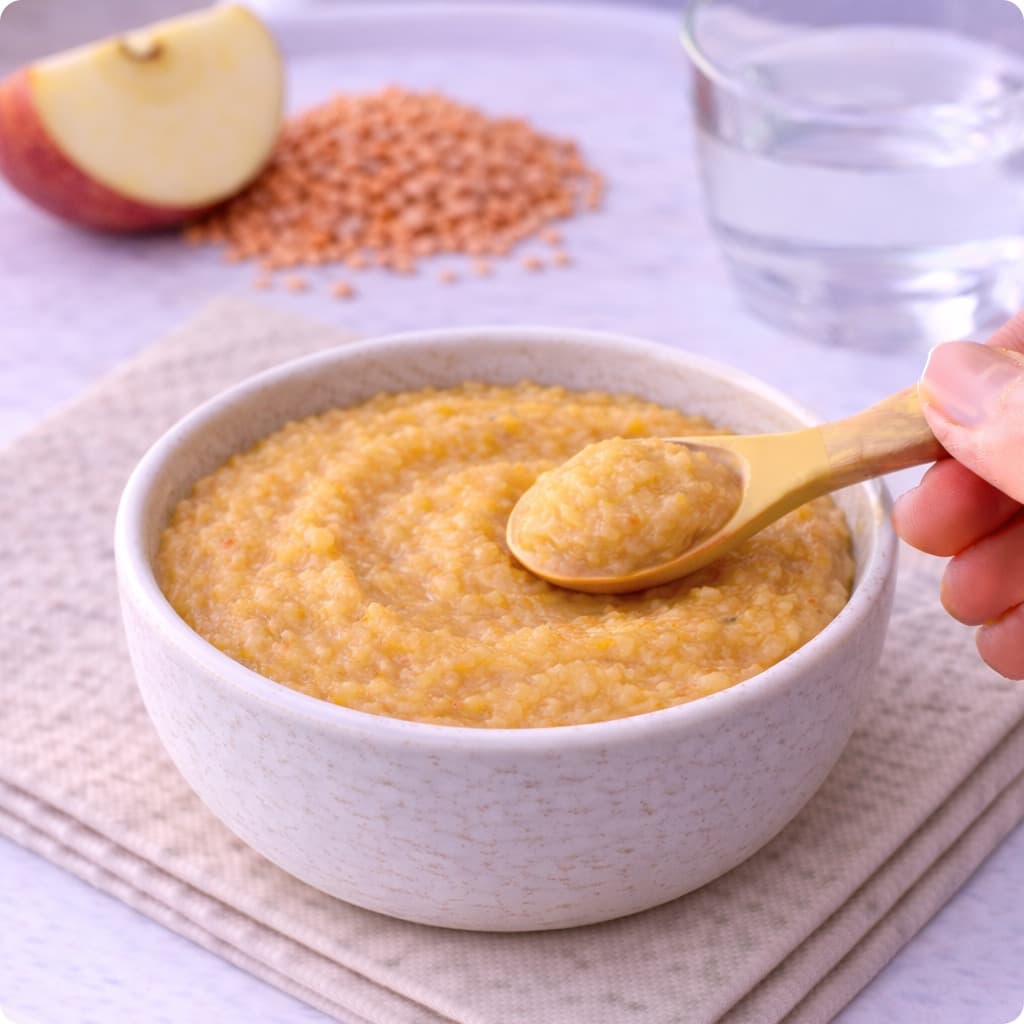
Lentils & Apple Purée
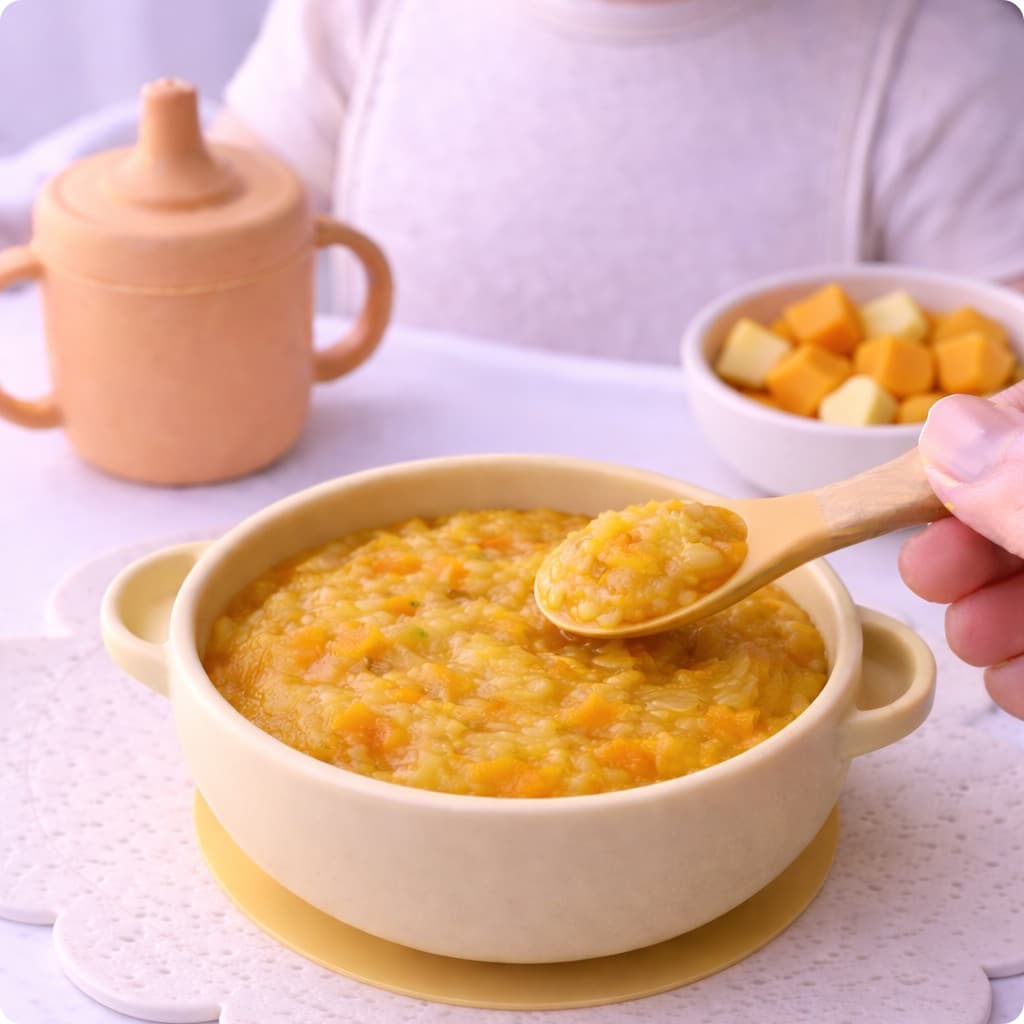
Pumpkin + Apple Mash
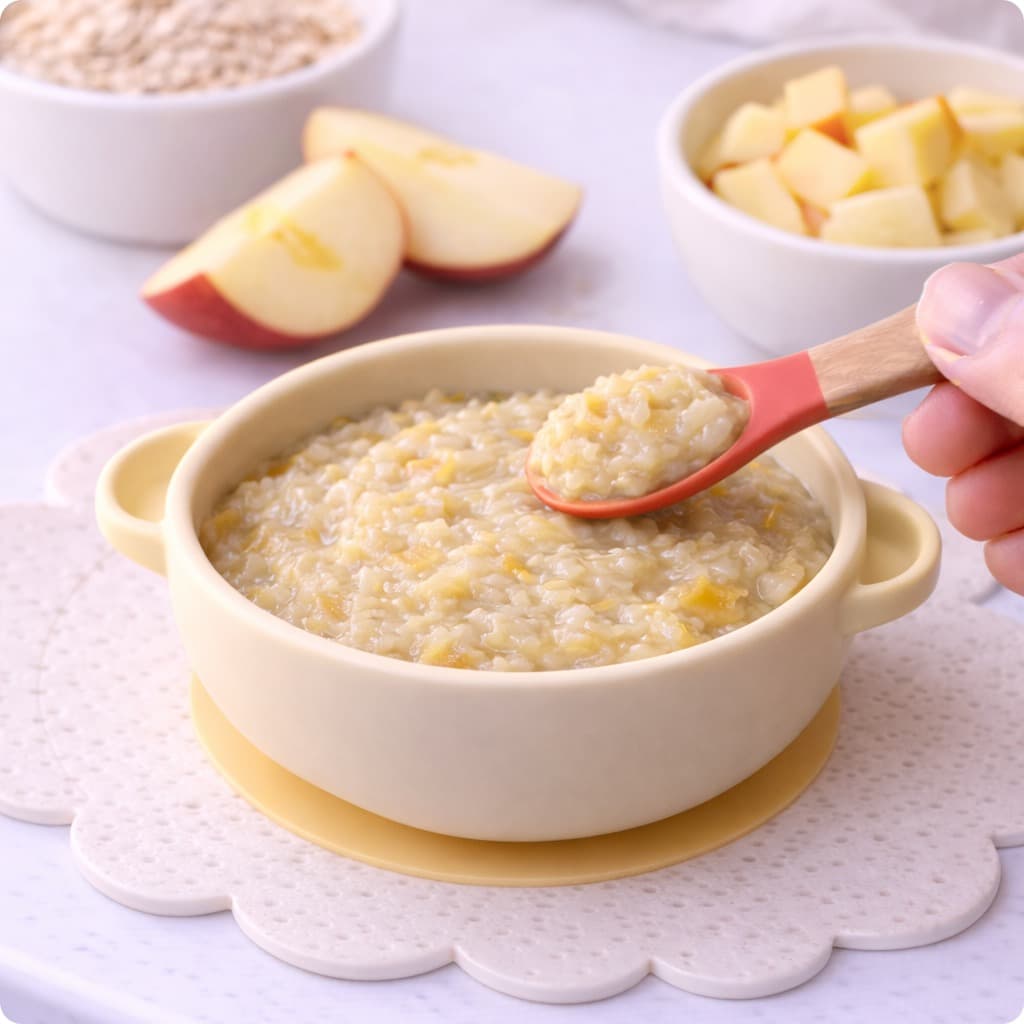
Apple & Oat Mash
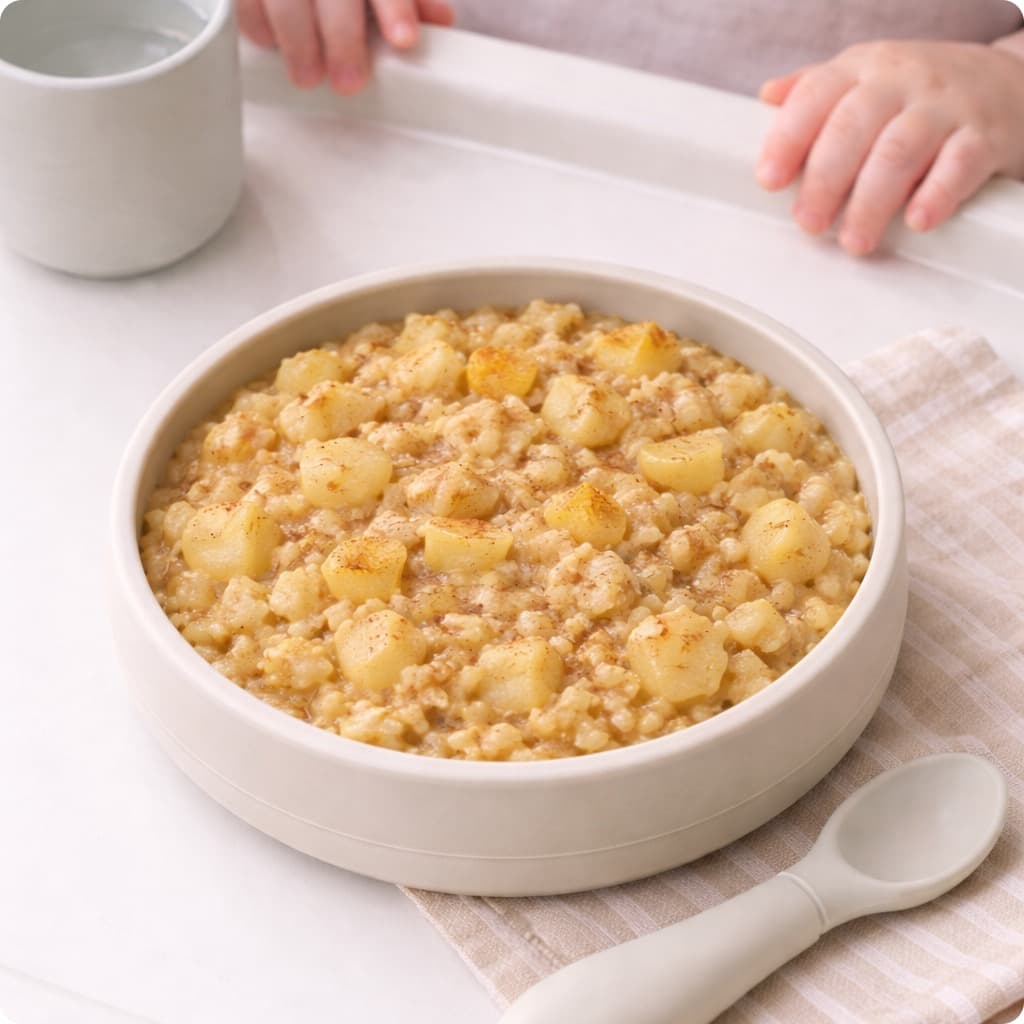
Millet + Apple + Cinnamon Mash
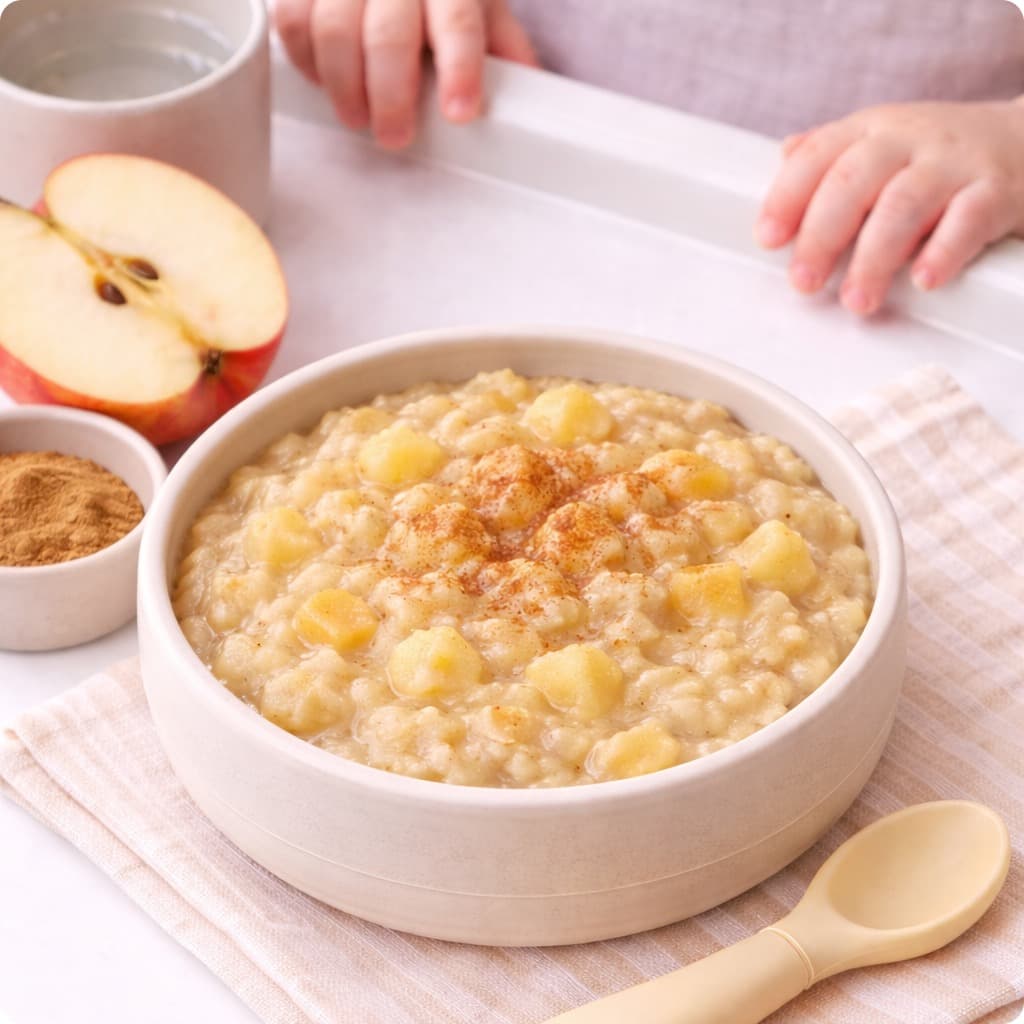
Warm Apple Cinnamon Oatmeal
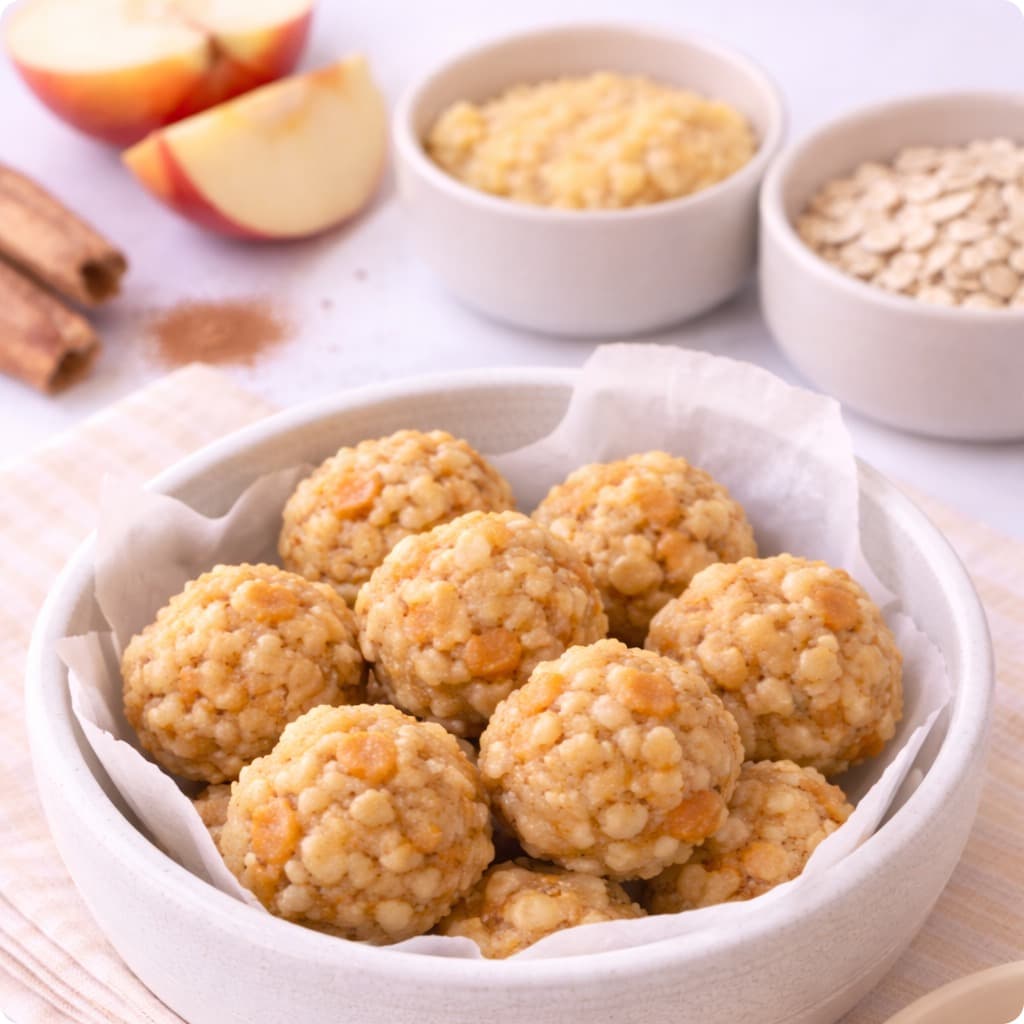
Apple Cinnamon Oat Bites
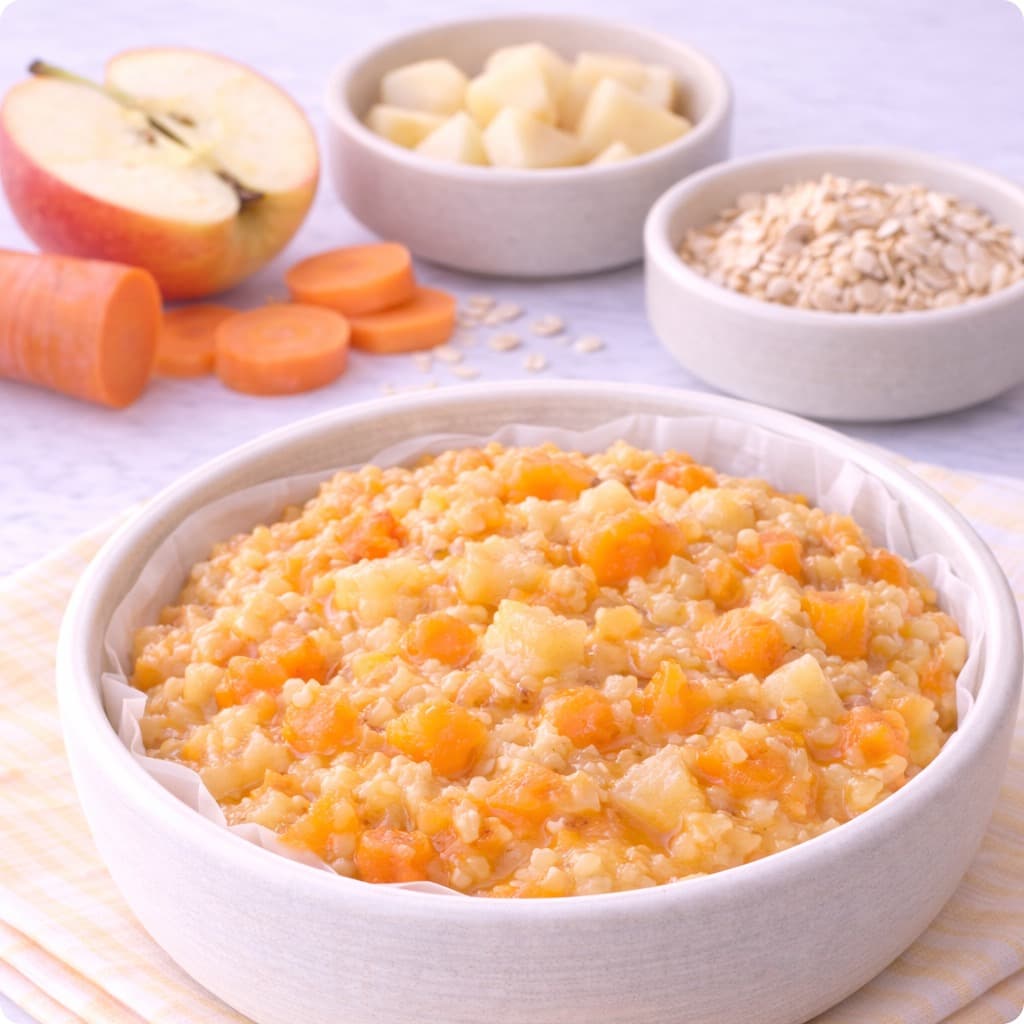
Apple + Carrot + Oat Fusion Bowl
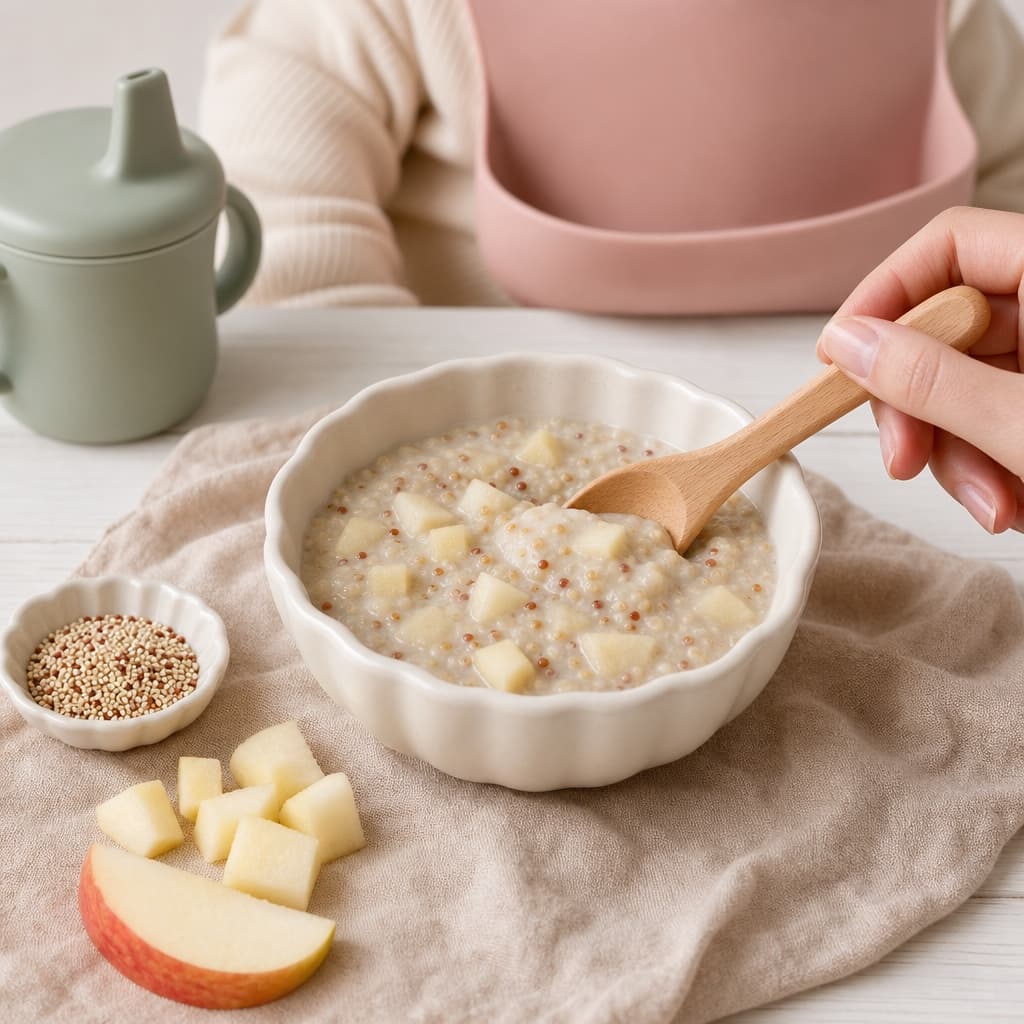
Apple Quinoa Breakfast Cream
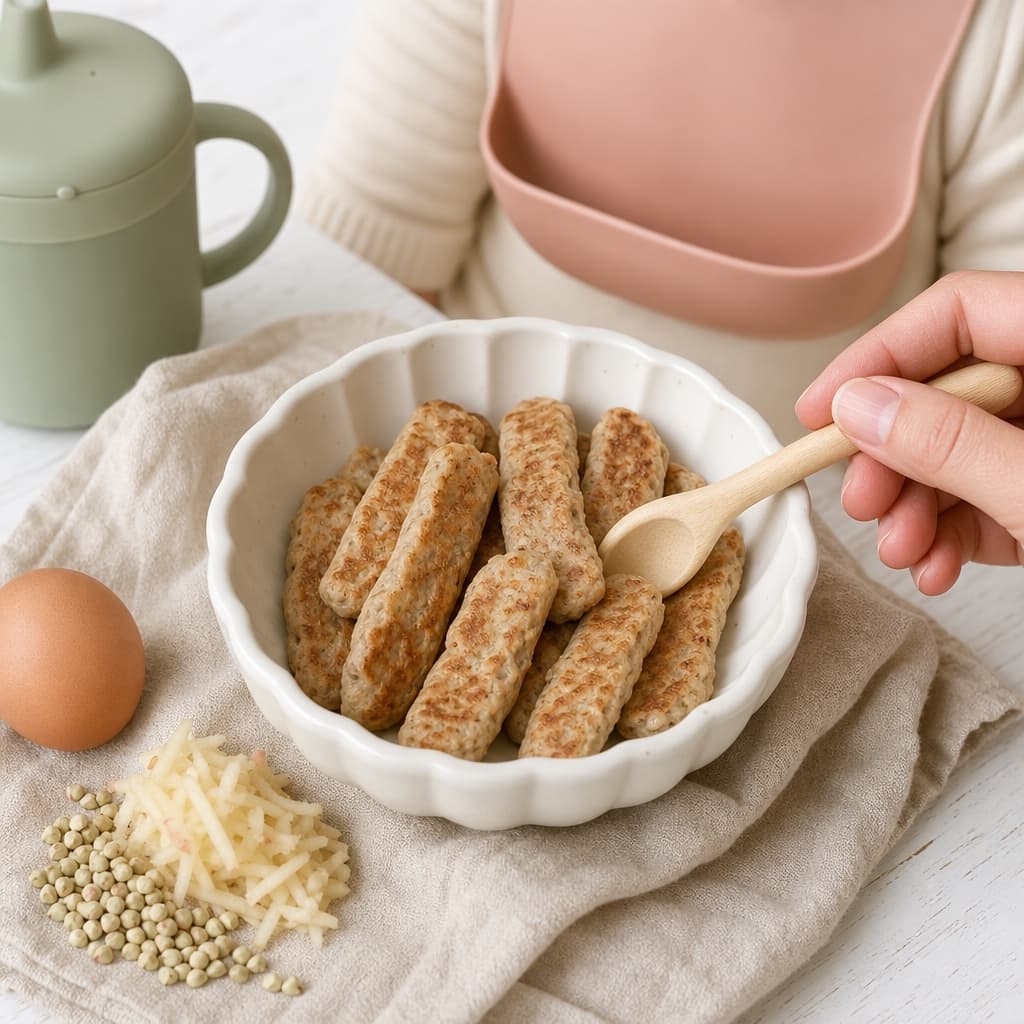
Apple Buckwheat Pancake Strips
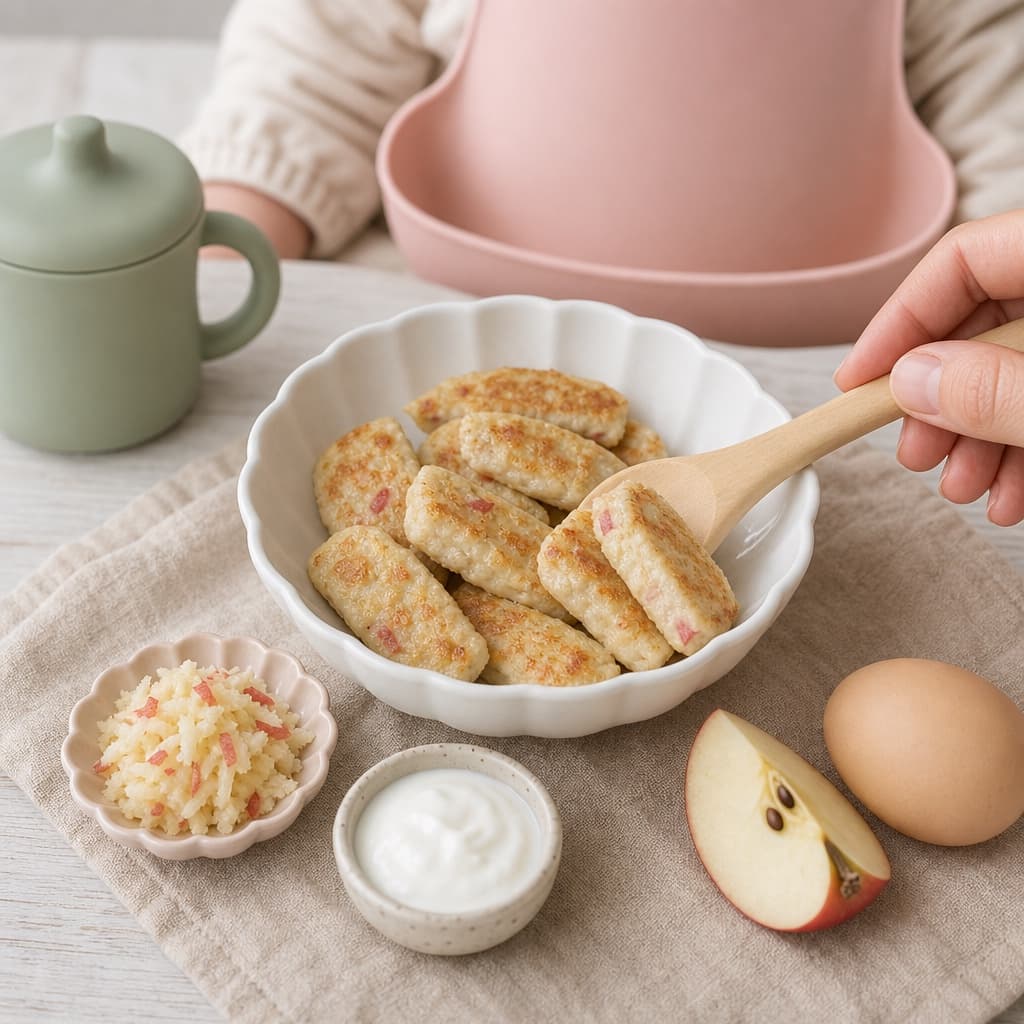
Mini Apple Yogurt Pancakes
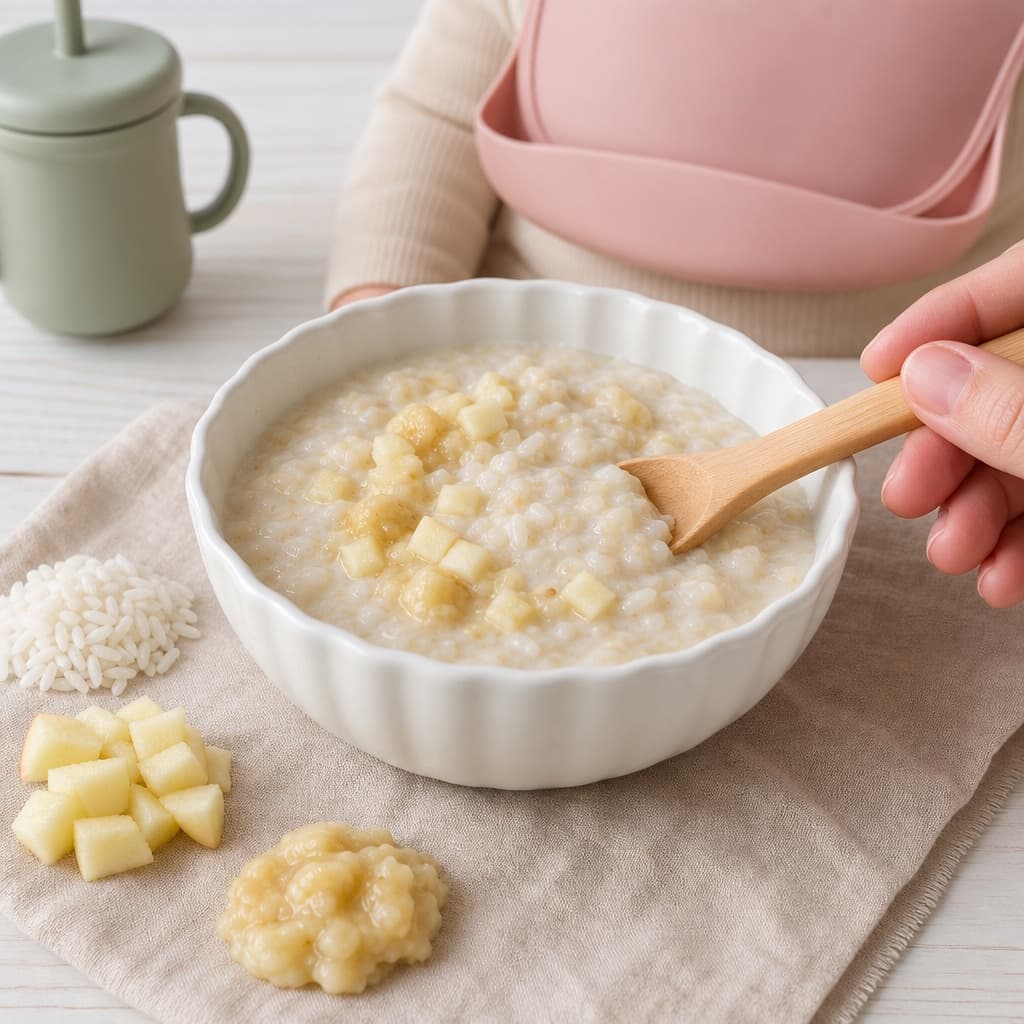
Coconut Rice Breakfast Pudding
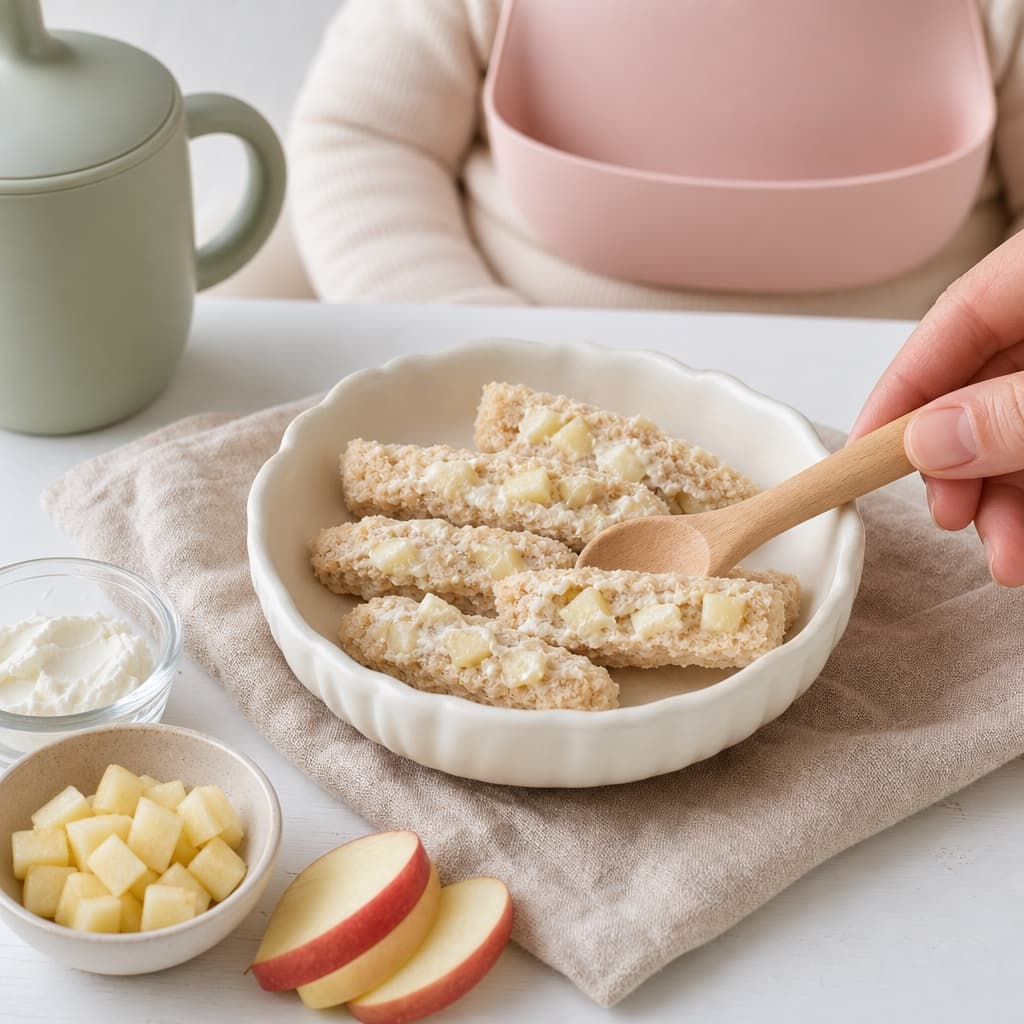
Cream Cheese Apple Toast Fingers
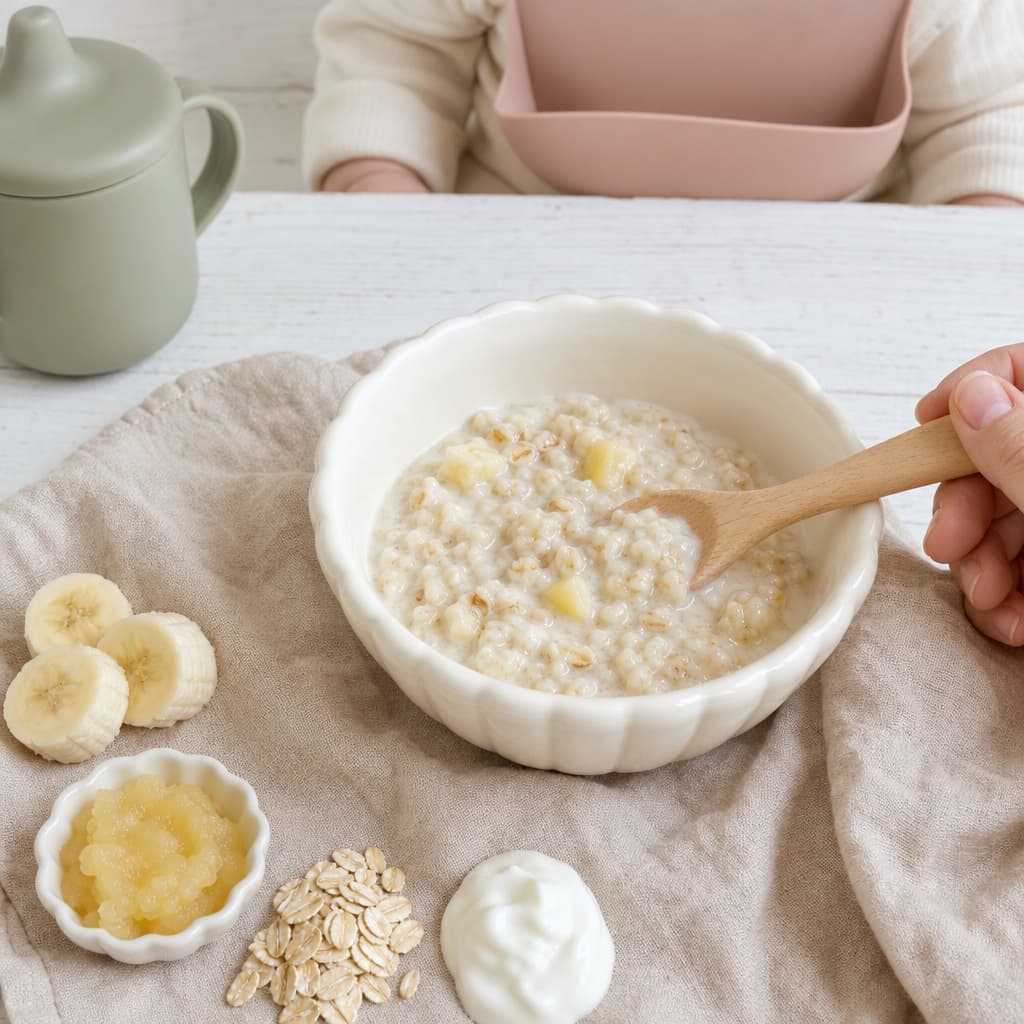
Soft Baby Muesli Bowl
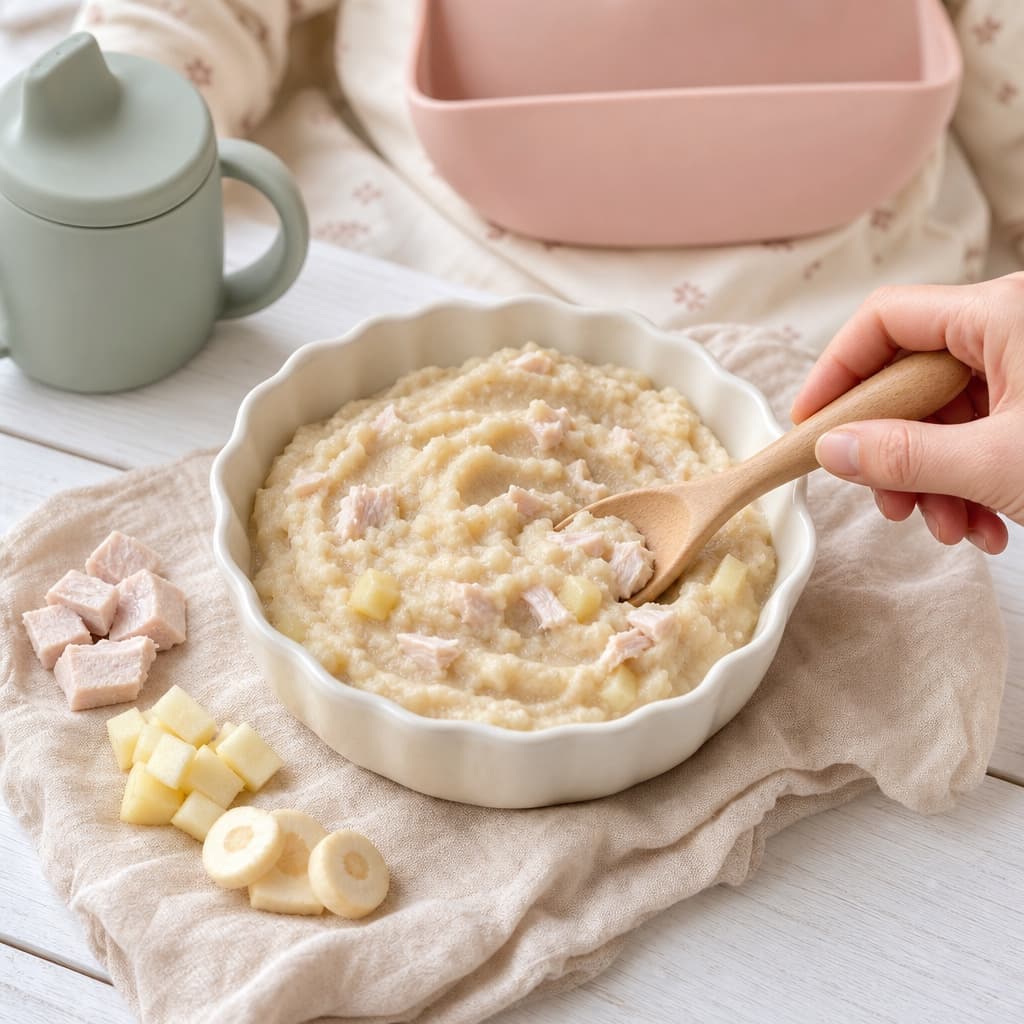
Turkey Apple Parsnip Bowl
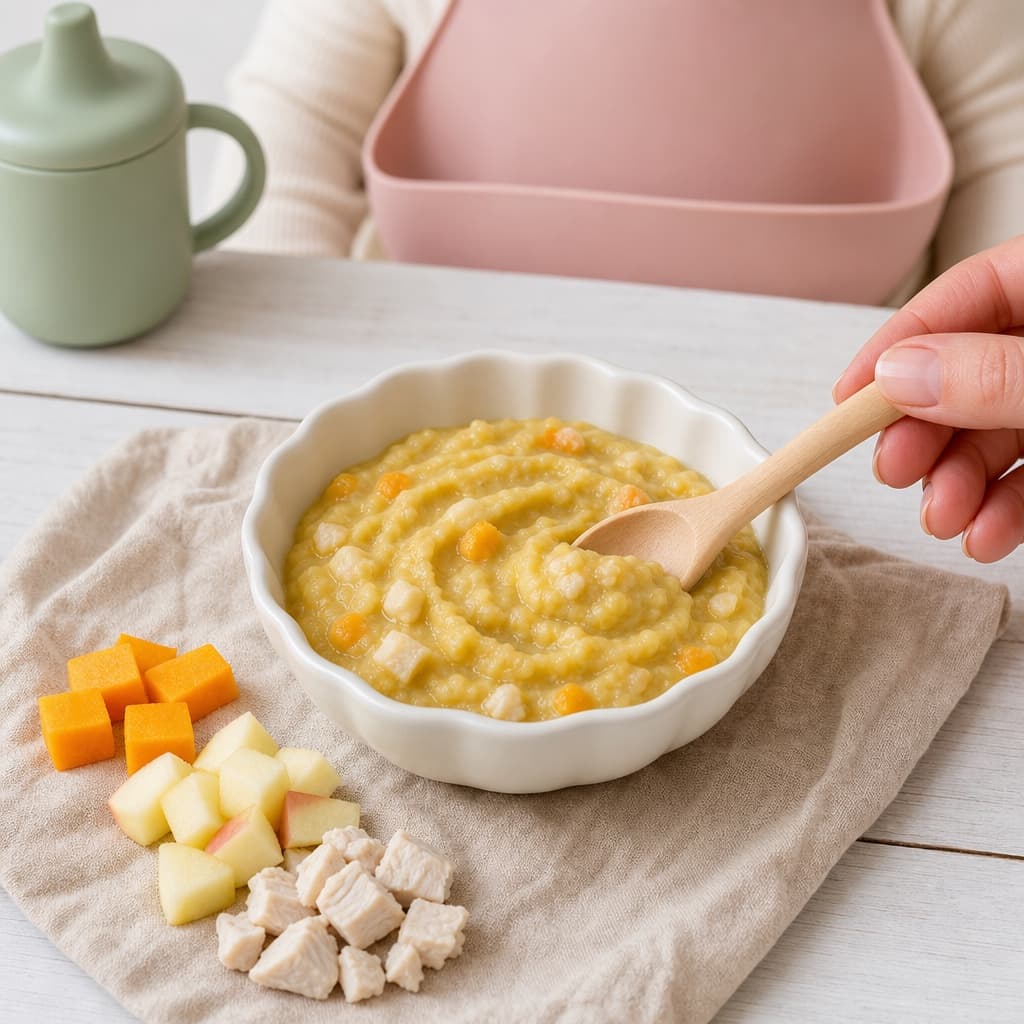
Chicken Apple Squash Bowl
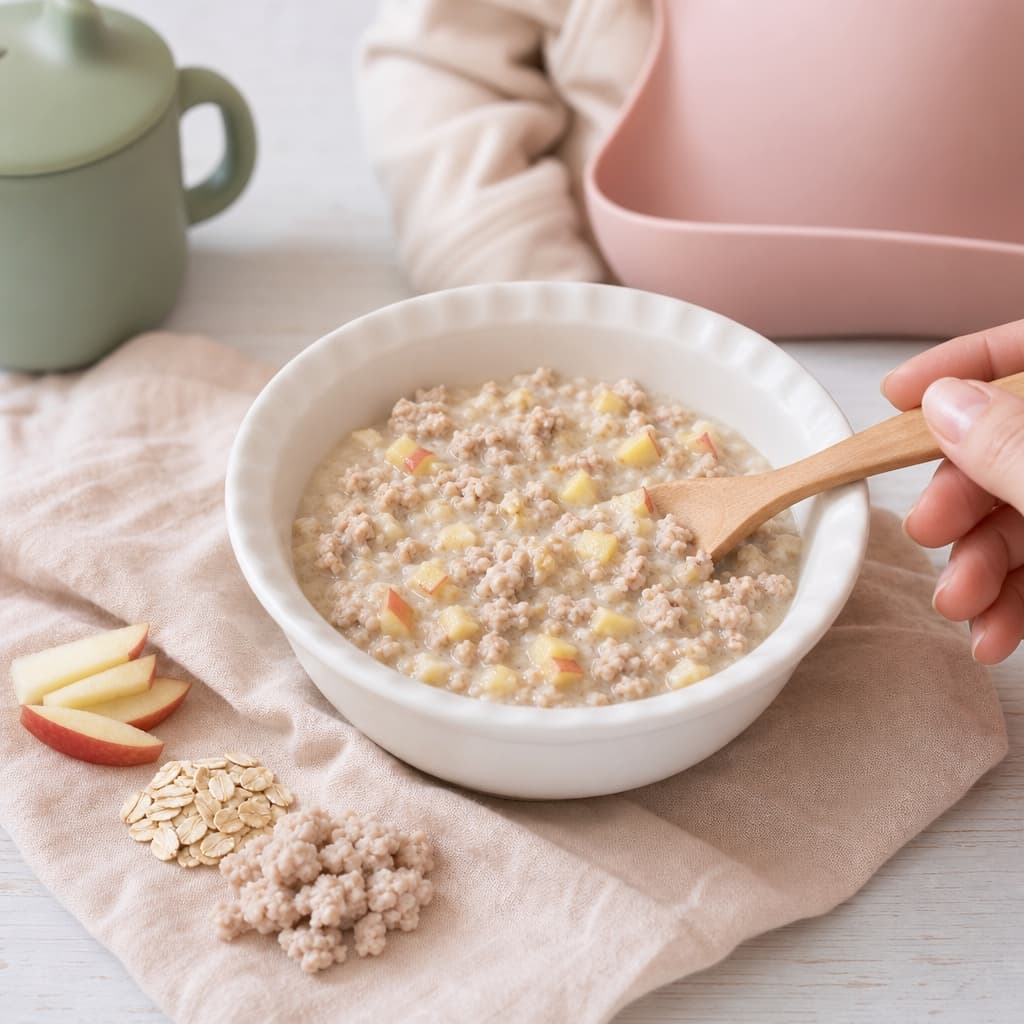
Turkey Apple Oat Savory Porridge
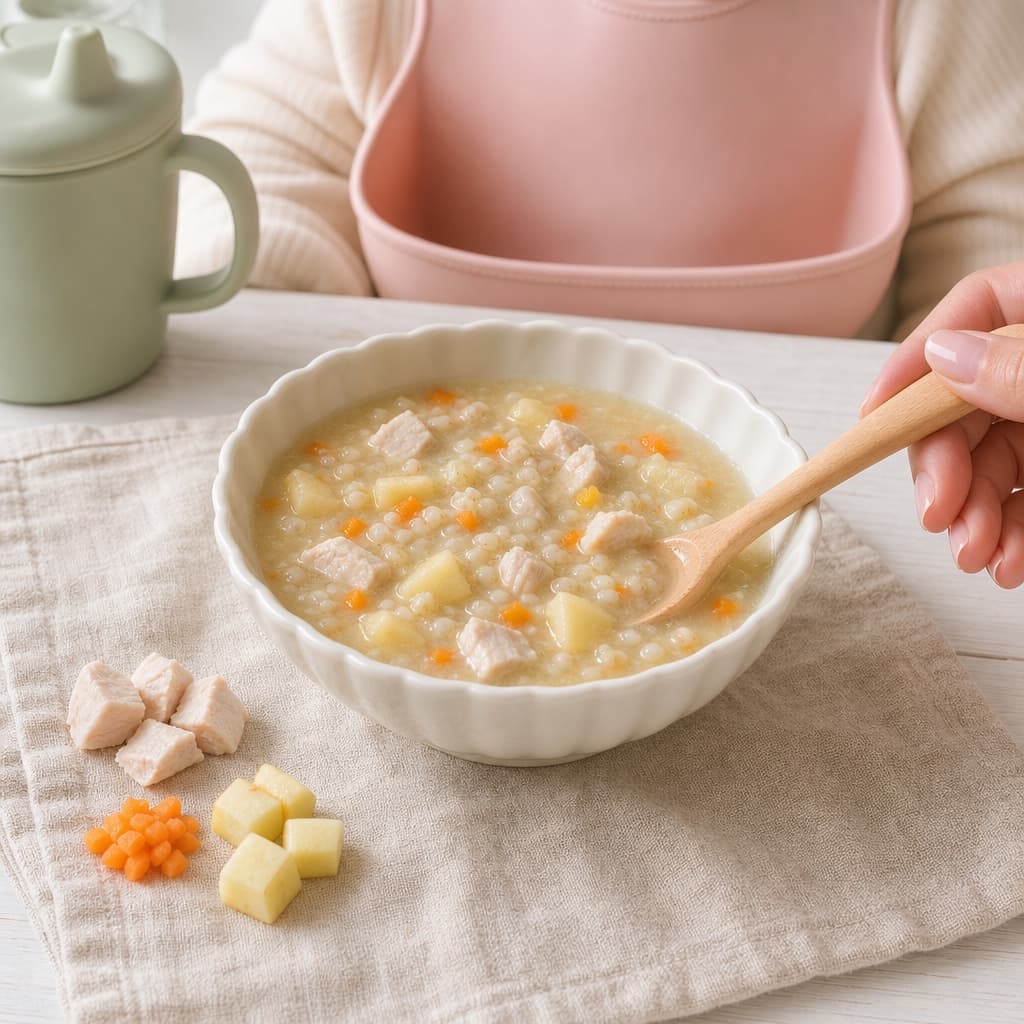
Chicken Apple Barley Soup
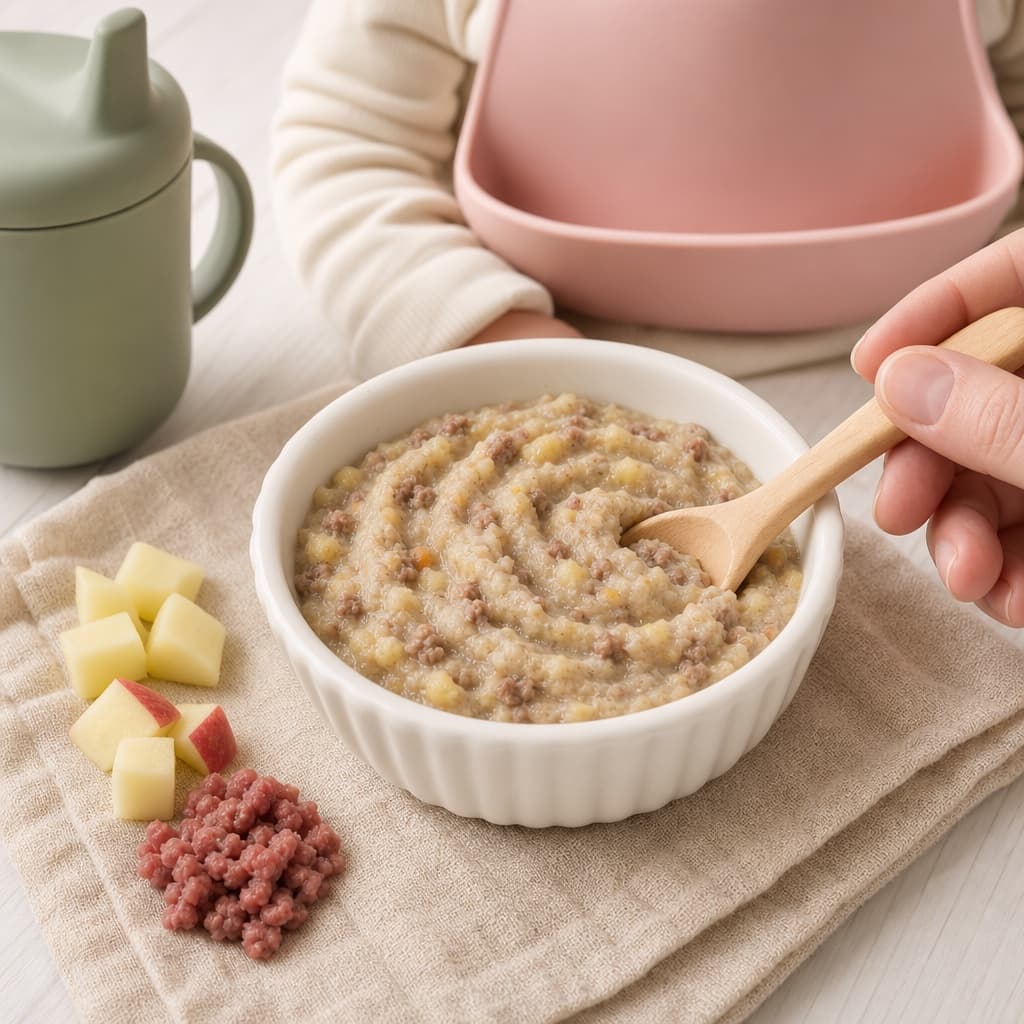
Beef Apple Potato Mash
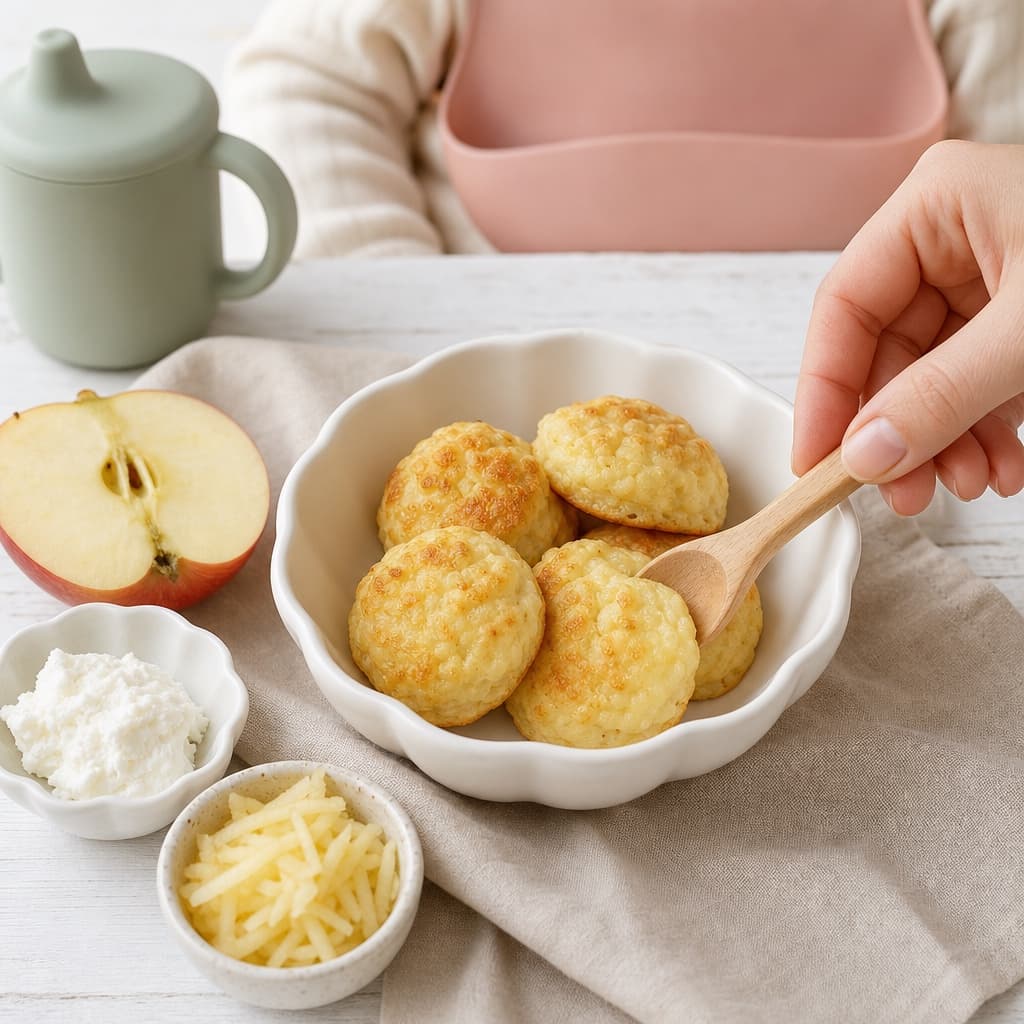
Ricotta Apple Mini Cakes
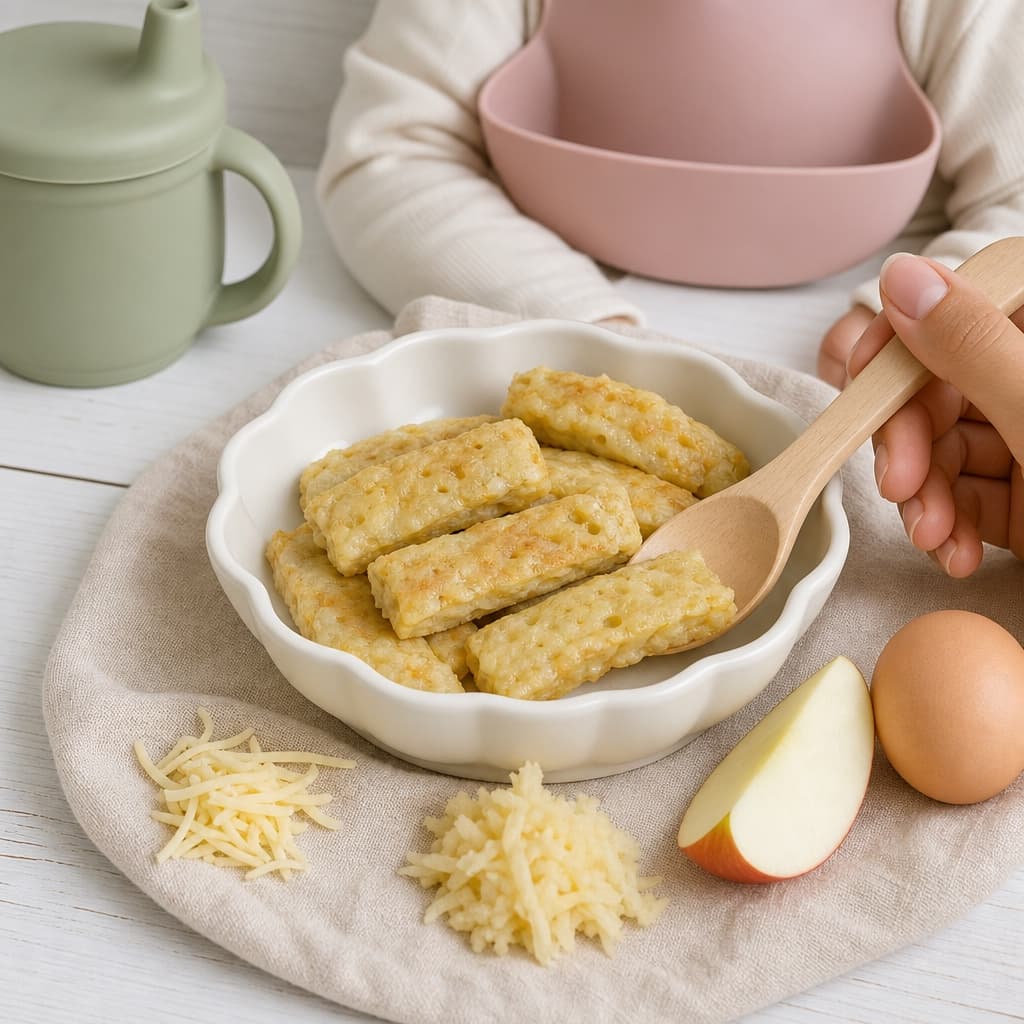
Apple Cheese Soft Squares
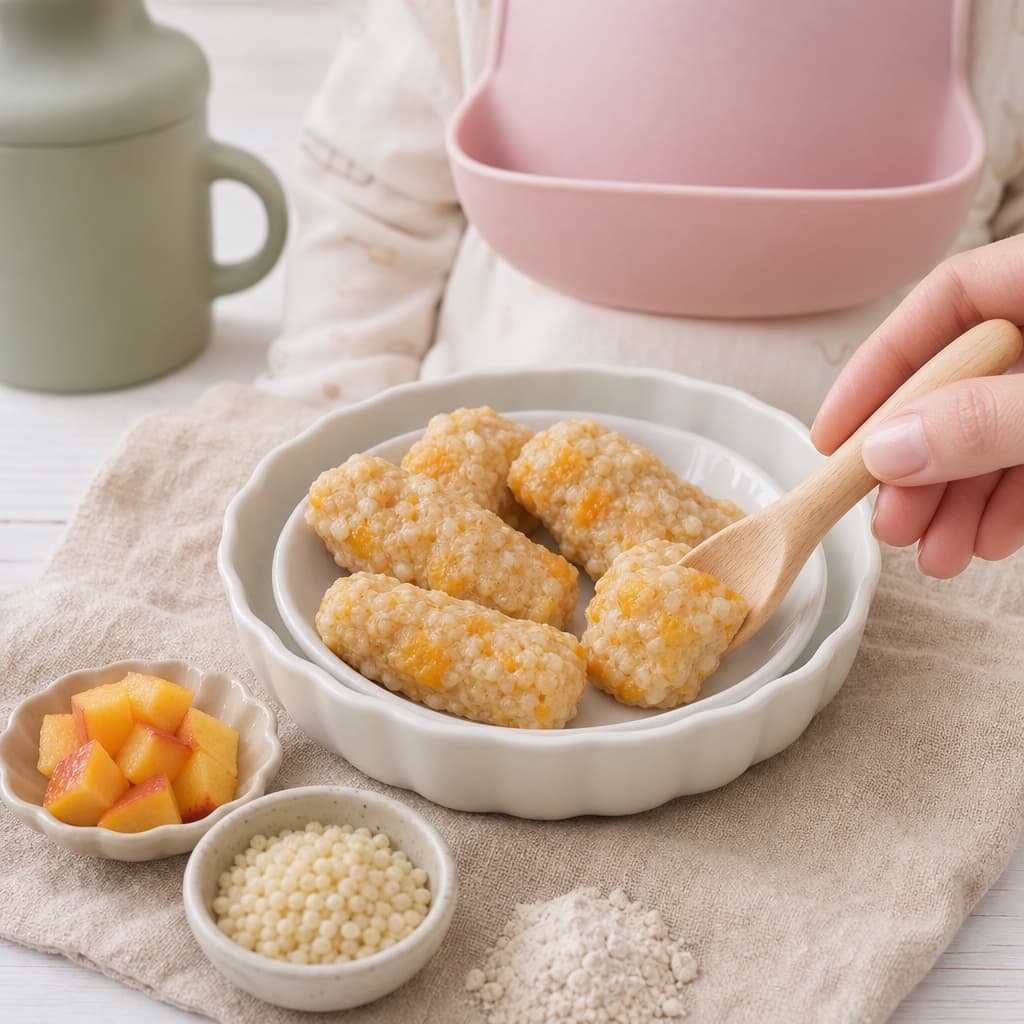
Peach Millet Snack Balls
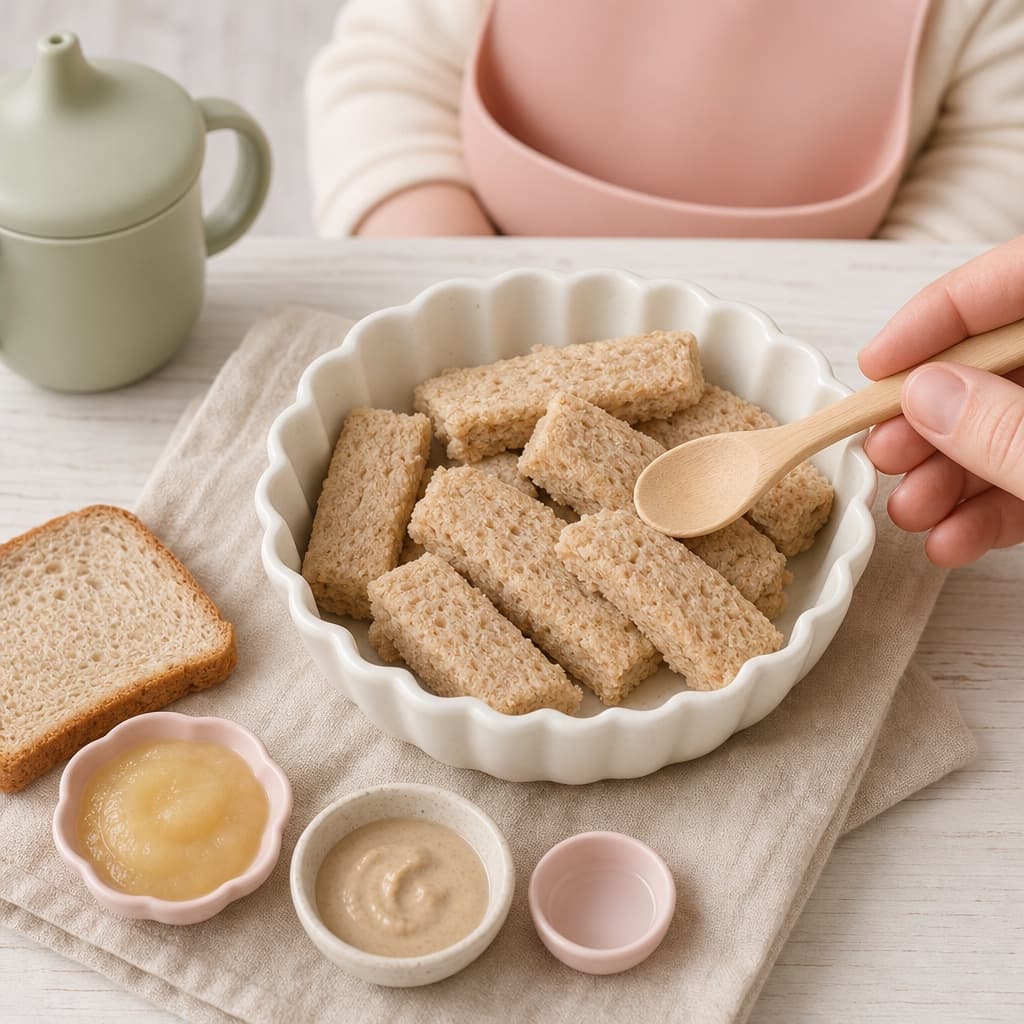
Apple Tahini Toast Strips
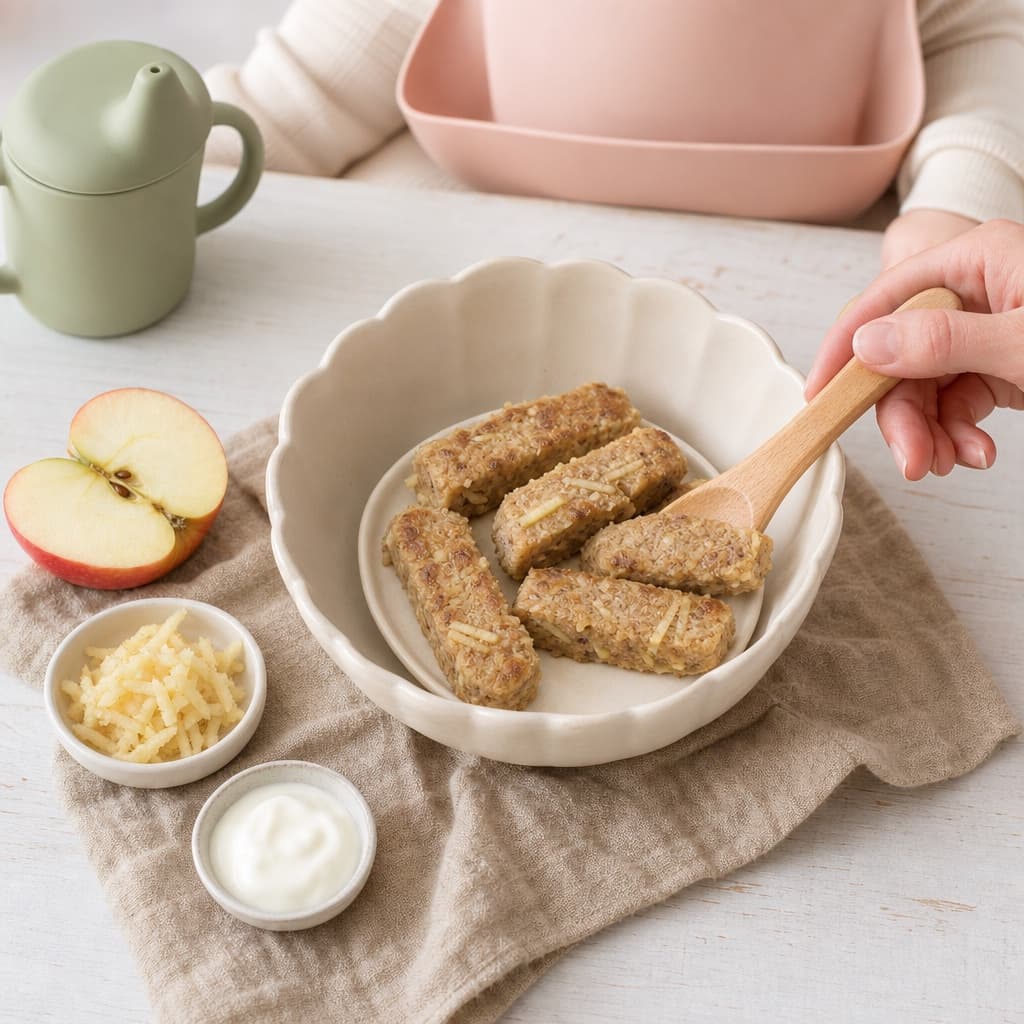
Soft Rye Apple Fingers
See all apple recipes for babies. Explore baby breakfast recipes, baby-led weaning recipes and first foods for baby for more ideas.
Frequently Asked Questions
Can babies eat Apple?
Yes. Babies can eat Apple starting around 6 months when they begin solid foods. It should be served in a safe texture and size for babies.
When can babies eat Apple?
Babies can eat Apple from around 6 months when starting solids. Babies can eat apple from around 6 months, once they're showing signs of readiness for solids. Raw apple - including hard chunks and thick round slices - is a choking hazard for young children, so cook apple until soft or grate it finely; offer thin, softened peel-on strips only for older, confident eaters. Apple is high in fibre, including pectin, which can help firm up loose stools; very large amounts of apple or apple juice can have the opposite effect, so offer it as part of a varied diet.
Is Apple a choking hazard for babies?
Apple can be a choking hazard if served in unsafe shapes. Raw apple is hard and a choking hazard - cook until soft for young babies, or grate finely. Steam, bake, stew, or roast apple until it mashes easily between your fingers. Remove the core, pips (seeds), and stalk before serving - apple seeds shouldn't be eaten in quantity. Avoid hard apple chunks and whole or thick round slices for young children - cut into thin strips or small soft pieces. Limit apple juice - it's high in natural sugar and offers little benefit; water and milk are the drinks babies need. Cut soft-cooked wedges to a size your baby can manage, and always supervise eating with your baby sat upright.
Is Apple a common allergen?
Apple is not typically a common allergen for babies. Many babies can try it from around 6 months as part of a varied diet.
How should Apple be served to babies?
6–9 months (puree): Steam or stew peeled, cored apple until very soft, then blend smooth. Combine with cinnamon (no sugar), pear, or oatmeal for variety. 6–9 months (BLW): Offer thick, soft-cooked wedges or strips your baby can hold. Leave a little peel on one edge for grip, but make sure the flesh squashes easily. 9–12 months: Smaller soft-cooked pieces as the pincer grasp develops, or coarsely grated raw apple folded into yoghurt or porridge (grating makes raw apple easier to manage). 12+ months: Soft raw apple matchsticks or thin slices once chewing is well established - still avoid large hard chunks. Baked apple, and apple in muffins or pancakes, work well.
What nutrients does Apple provide for babies?
Apple provides nutrients like fibre, vitamin C, iron that support babies' growth and development.
How long can I store Apple for babies?
Cook Apple to a safe temperature and store it in the refrigerator for up to 2 days, or freeze in single-serving portions for up to 1 month to preserve nutrients.
Should I buy organic Apple for my baby?
Organic Apple isn't strictly necessary for babies, but some families prefer to reduce pesticide exposure. Wash conventional produce thoroughly. Variety and freshness matter most.
How should I introduce Apple for the first time?
Offer a small amount of Apple in an age-appropriate texture when your baby is hungry but not starving, ideally early in the day so you can watch for any reactions over several hours.
Is Apple a good finger food for babies?
Yes. Apple can be an excellent finger food for babies when cut into strips or soft pieces they can grasp. Make sure the texture mashes easily between your fingers.
What foods pair well with Apple for baby?
Apple pairs beautifully with plain yogurt, oatmeal, soft cheese, or other fruits like ripe pear and banana for varied baby meals.
Should I cook Apple before serving it to my baby?
Yes. Cook Apple until tender and easily mashable before serving it to your baby. Steaming, boiling, or roasting softens it enough to be safe.
How much Apple can a baby eat?
There's no fixed amount. Start with 1-2 tablespoons of Apple from around 6 months and let your baby regulate intake. Breast milk or formula remains the main source of nutrition in the first year.
Should I peel or remove the pit from Apple for my baby?
Yes. Before serving Apple to your baby, remove any inedible parts (skin, seeds, pit, or tough core) as recommended in the safety guide to reduce choking risk.
Can I mix Apple with baby cereal?
Yes. Mashing Apple and stirring it into baby cereal (oat, rice, or multigrain) is a simple way to add flavor, fiber, and nutrients to your baby's meals.
How should I store Apple fresh for my baby?
Store fresh Apple in a cool, dry place or in the refrigerator crisper drawer, depending on the food. Wash just before preparing and use it when ripe and firm for the best quality for your baby.
Safety tips
- ✓Raw apple is hard and a choking hazard - cook until soft for young babies, or grate finely.
- ✓Steam, bake, stew, or roast apple until it mashes easily between your fingers.
- ✓Remove the core, pips (seeds), and stalk before serving - apple seeds shouldn't be eaten in quantity.
- ✓Avoid hard apple chunks and whole or thick round slices for young children - cut into thin strips or small soft pieces.
- ✓Limit apple juice - it's high in natural sugar and offers little benefit; water and milk are the drinks babies need.
- ✓Cut soft-cooked wedges to a size your baby can manage, and always supervise eating with your baby sat upright.
Get recipes + a feeding plan for your baby
Save this food to your baby's list, get age-appropriate recipes and follow a personalized feeding schedule - 350+ baby-safe meals in the app.
Try Nibli today to start planning your baby's meals.
verifiedSources & References
This guide is informed by current guidelines from leading health organizations: