How to Cut Food for Baby-Led Weaning
Last updated April 2026
Simple and safe ways to prepare foods for babies starting solids.
One of the biggest questions parents have when starting solids is how to safely cut food for their baby.
Baby-led weaning allows babies to explore real foods from around six months of age, but the way food is cut and prepared is important for safety and self-feeding.
The goal is to offer foods that are soft enough to mash with gentle pressure and shaped in a way that babies can easily hold.
Baby-Led Weaning Safety Basics
When preparing foods for babies, the key is choosing textures and shapes that reduce choking risk and allow babies to self-feed.
Good BLW foods should be:
- •soft enough to mash with fingers
- •large enough for babies to grasp
- •easy to hold without slipping
- •cut in long pieces or soft chunks
Hard foods, small round shapes, and very sticky foods should always be modified before offering them to babies.
How to Cut Popular Baby Foods
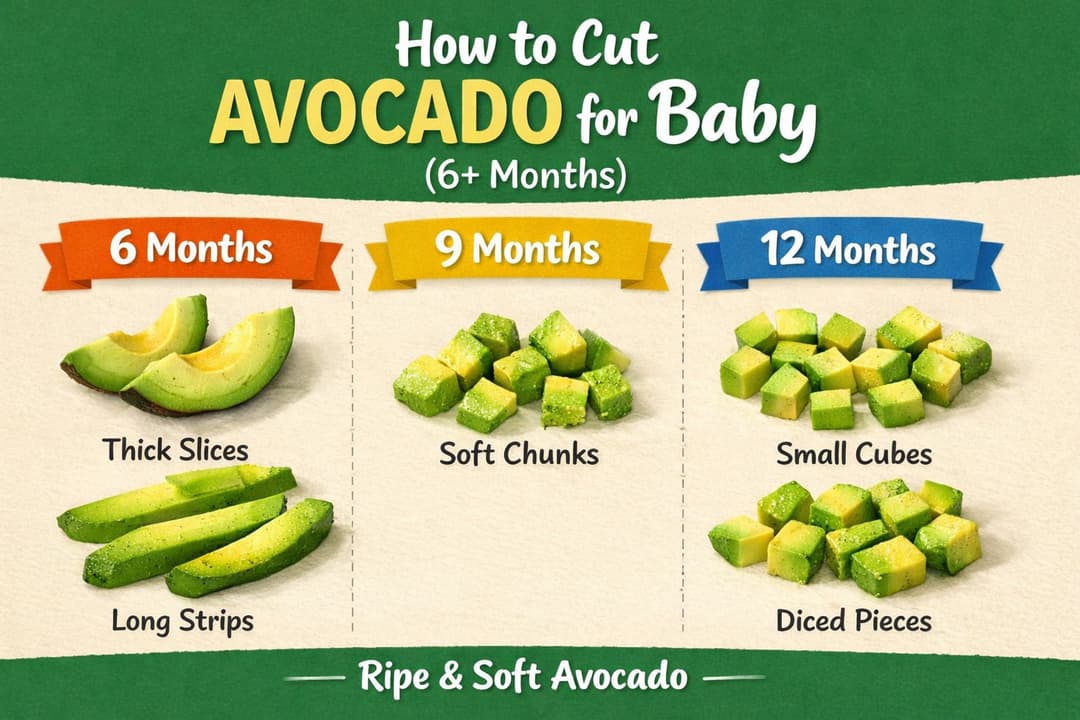
Avocado
Cut into long thick wedges that babies can hold easily.
Avocado is naturally soft and one of the easiest first foods for baby-led weaning. Slice lengthwise into spears about the width of your finger.
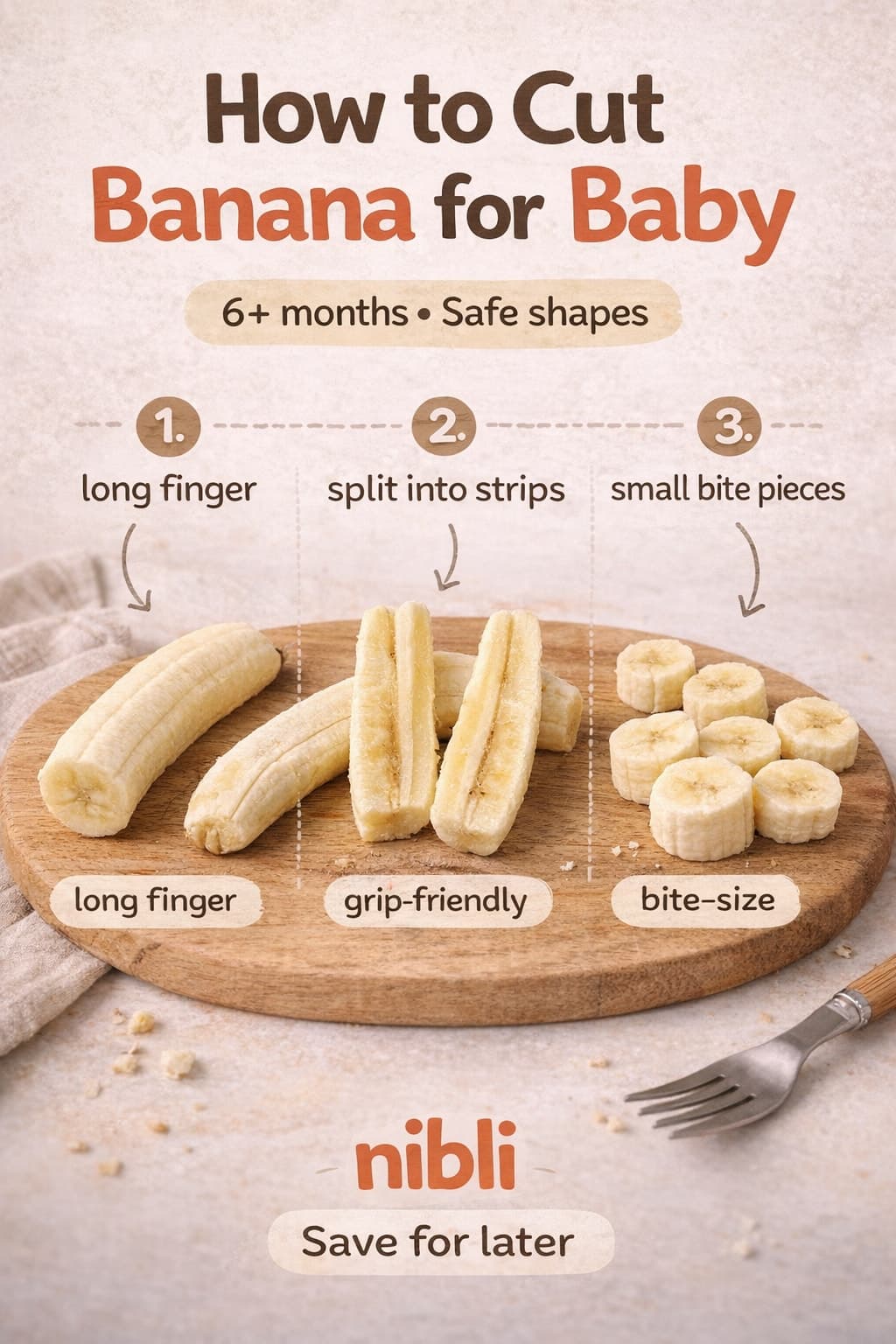
Banana
Bananas can be served in several baby-friendly ways:
- • Cut lengthwise into spears
- • Partially peel and leave handle
- • Mash slightly for beginners
The partially peeled method gives babies a natural handle to grip.
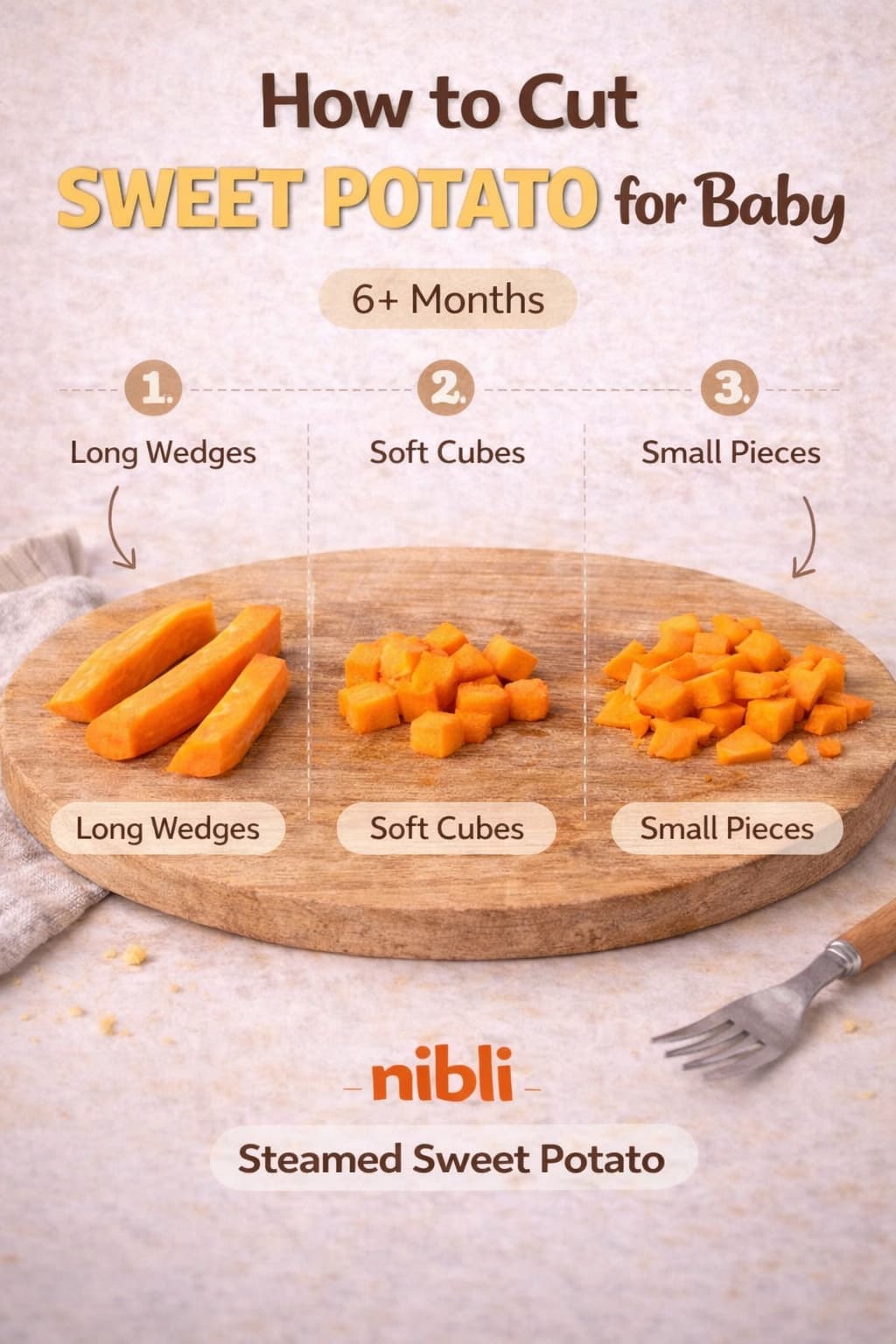
Sweet Potato
Roast or steam until very soft. Cut into thick wedges that babies can hold easily. Sweet potato is nutrient-dense and simple to prepare for your baby feeding schedule.
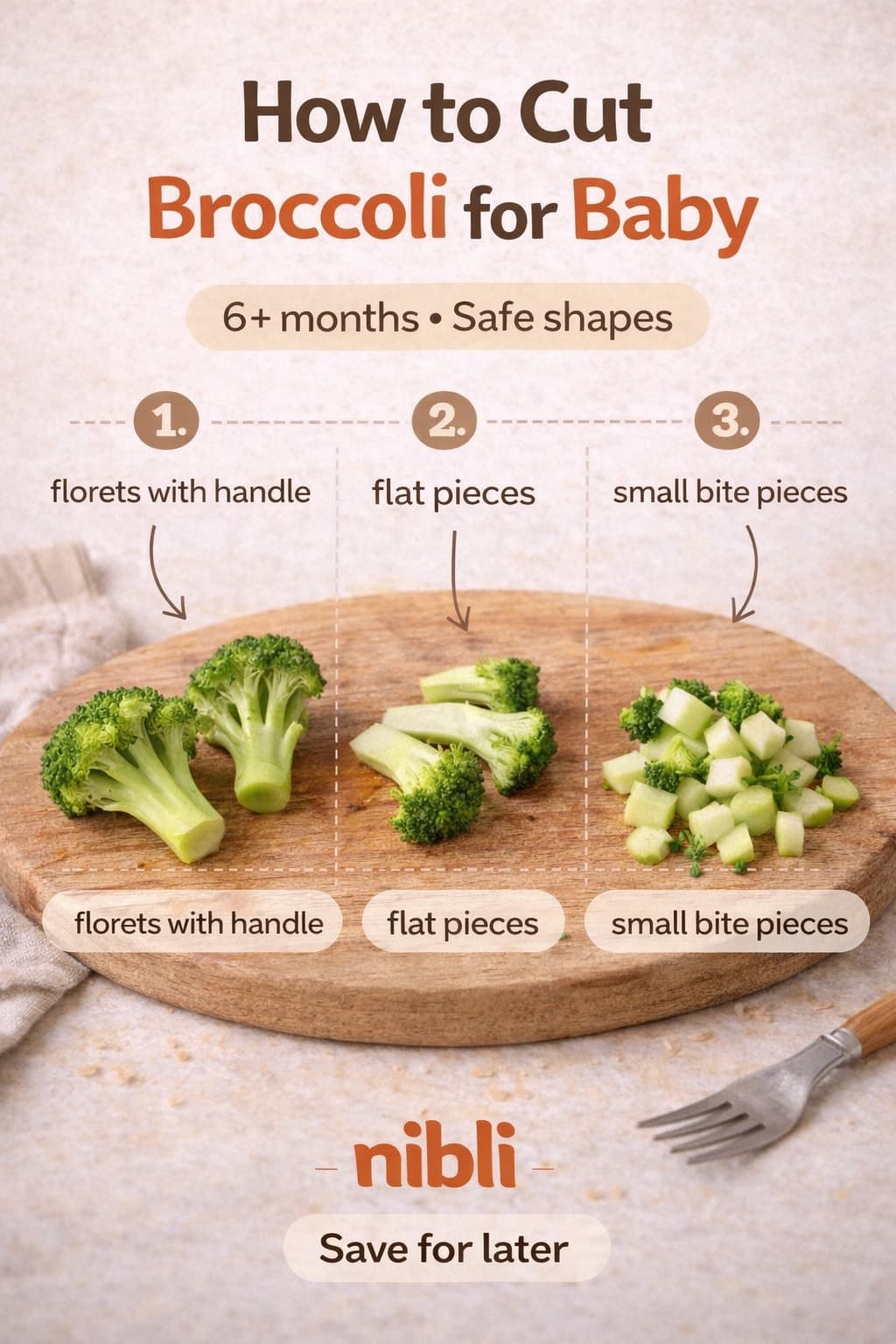
Broccoli
Steam broccoli until soft and serve whole florets. The stem becomes a natural handle for babies to grasp.
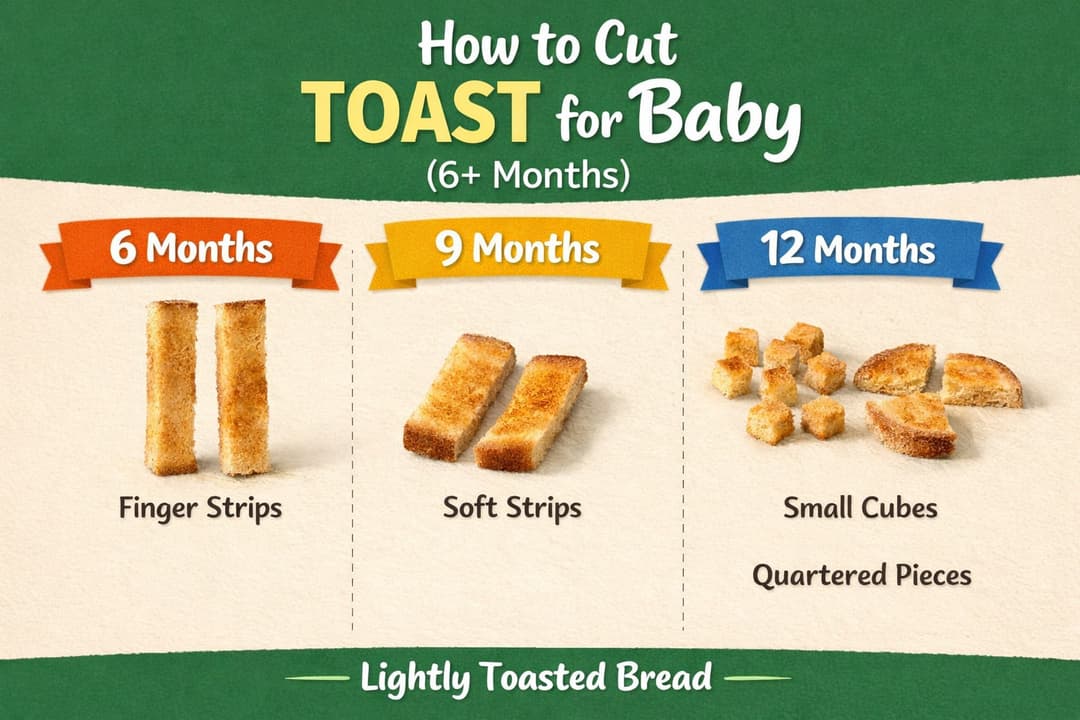
Toast
Cut toast into finger-sized strips. Spread with soft foods like avocado, nut butter (thin layer), or yogurt for added nutrition.
See our full guides for strawberries, blueberries, apple, eggs, chicken, mango, and peach.
How Cutting Changes as Babies Grow
6–7 months
- • Large soft pieces
- • Finger-length foods
- • Soft wedges
8–9 months
- • Smaller soft pieces
- • Shredded foods
- • Soft chunks
10–12 months
- • Bite-sized pieces
- • More complex textures
- • Family foods
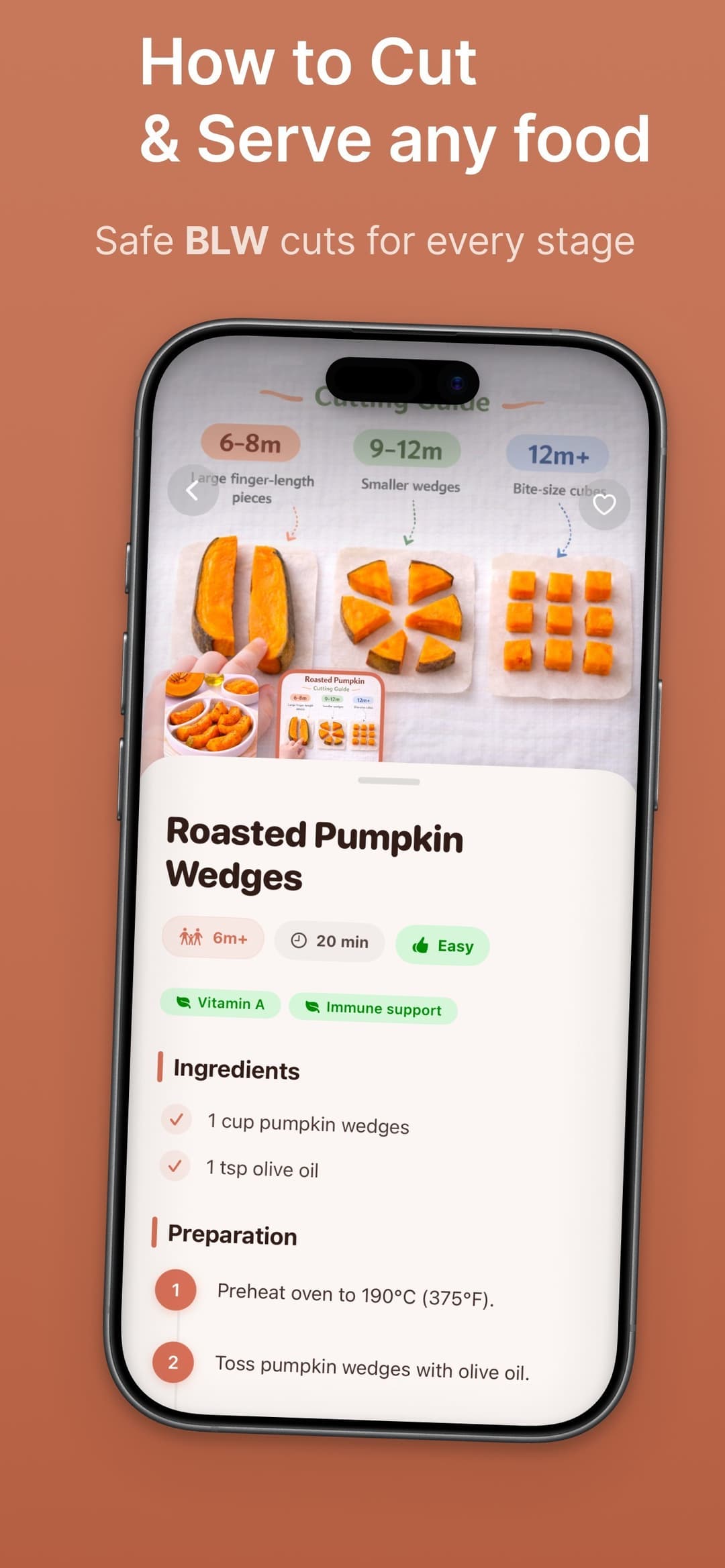
See Exactly How to Prepare Baby Foods
Many parents worry about whether they are preparing foods safely.
Nibli includes visual cutting guides that show exactly how to prepare foods for babies at different stages.
Inside the app you can:
- •see how to cut foods safely
- •explore baby-led weaning recipes
- •follow a personalized feeding schedule
- •track foods your baby has tried
The cutting guides inside Nibli match your baby's age, so you always know the right size and texture to offer.
verifiedSources & References
This guide is informed by current guidelines from leading health organizations:
Frequently Asked Questions
How do you cut food for baby led weaning?
Foods for baby-led weaning should be cut into large soft pieces that babies can hold with their hands and easily mash with their gums.
What foods are choking hazards for babies?
Small round, hard, or sticky foods can pose choking risks if not prepared properly for babies.
How soft should baby food be?
Foods should be soft enough to mash easily between fingers before serving to babies.
What size should baby finger foods be?
Large stick-shaped pieces are often easiest for babies to hold when starting baby-led weaning.
Do babies need teeth for finger foods?
Babies can eat many soft finger foods with their gums even before their teeth come in.
What is the safest way to prepare food for babies?
Cooking foods until soft and cutting them into appropriate shapes helps reduce choking risks.
How big should a baby's food pieces be at 6 months?
At 6 months, finger foods should be cut into long stick shapes about 2-3 inches long and 1 finger wide - large enough that babies can grab them with a palmar grasp, with a portion sticking out of the fist for chewing. Soft enough to mash between two fingers.
How should I cut food for a 9 month old?
From 9 months babies develop a pincer grasp. Cut foods into bite-sized pieces about ½ inch (1.5 cm) - pea-sized for round/firm foods. Continue avoiding round, hard, sticky foods unless modified (e.g., halve or quarter grapes and cherry tomatoes).
What size should toddler finger foods be?
From 12 months, foods can be cut into bite-sized pieces about ½ inch (1.5 cm). Round foods like grapes and cherry tomatoes should still be quartered until age 4. Hot dogs, sausages, and meat sticks should be cut lengthwise then chopped.
What are the most common choking hazards for babies?
Whole grapes, cherry tomatoes, blueberries, hot dogs, sausages, hard raw vegetables (carrots, apples), nuts, popcorn, hard candy, marshmallows, sticky foods like peanut butter (from a spoon), and large chunks of meat or cheese. Always modify these before serving.
How do I cut grapes for my baby?
Quarter grapes lengthwise (long-ways) for babies and toddlers up to age 4. Halving is not enough - quartered prevents the round shape from blocking the airway. The same rule applies to cherry tomatoes and blueberries (or just squish them).
How do I cut hot dogs and sausages for my baby?
Slice the hot dog or sausage lengthwise into quarters first (so it is no longer round), then chop into small pieces. Round slices of hot dog are one of the highest choking risks for young children - never serve them whole or in coin shapes.
Can babies eat raw vegetables?
Hard raw vegetables (carrots, raw apple, celery) are choking hazards before age 4. Always cook hard vegetables until soft enough to mash before serving as finger food. Soft raw vegetables like ripe avocado or grated cucumber are fine.
What if my baby is gagging on food?
Gagging is normal and protective - it is the body's way of moving food forward in the mouth. Stay calm, do not put fingers in baby's mouth, and let them work it through. Choking is silent or causes high-pitched sounds - that needs immediate intervention.
Do babies need teeth to eat solids?
No. Babies' gums are strong enough to mash soft foods. Most start solids before any teeth appear. Focus on softness - anything that mashes between two fingers is safe to chew, even with no teeth.
Make Baby-Led Weaning Easier
Nibli helps parents confidently introduce new foods with safe cutting guides, simple recipes, and personalized feeding schedules.
Try Nibli today to start your baby's food journey.