Iron Rich Foods for Babies
Last updated May 2026
Support healthy growth with iron-rich foods when starting solids.
Iron is one of the most important nutrients for babies starting solids.
Around six months of age, babies begin needing additional iron from foods because their natural iron stores start to decrease.
Including iron-rich foods in your baby's meals helps support brain development, growth, and energy levels.
The good news is that many everyday foods contain iron and can be safely introduced as part of baby-led weaning or traditional weaning.
Why Iron Is Important for Babies
Iron plays a key role in brain development and oxygen transport in the body.
Babies are born with iron stores that typically last around six months. After that, iron needs to come from foods.
Without enough iron, babies can become tired, irritable, and may struggle with development.
Including iron-rich foods regularly helps ensure babies receive the nutrients they need while exploring solid foods.
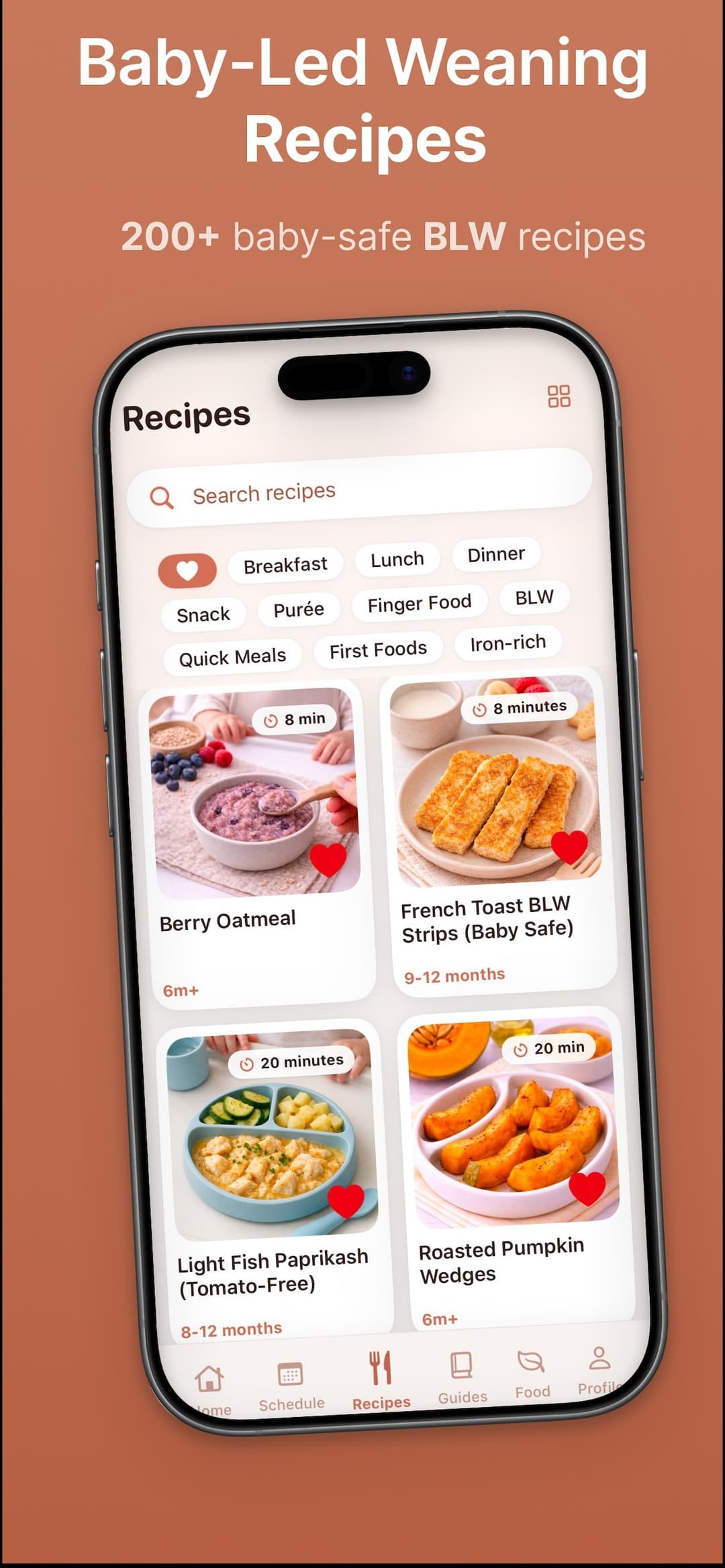
Best Iron Rich Foods for Babies
Meat and Fish
Beef, chicken, turkey, lamb, salmon, sardines
Animal sources provide heme iron, which is easier for the body to absorb. Shred or finely chop for babies starting solids.
Plant-Based Iron Foods
Lentils, beans, chickpeas, tofu, quinoa, oats
Plant-based iron is still beneficial when combined with vitamin C foods like fruit, tomatoes, or peppers.
Other Iron Sources
Eggs, iron-fortified cereals, spinach, pumpkin seeds
How Much Iron Does My Baby Need Each Day?
Recommended daily iron intake rises sharply at 7 months because babies' birth iron stores have run low and growth is rapid. Hitting the target through food (or fortified cereal + food) is the goal.
| Age | Daily iron (RDA) | Notes |
|---|---|---|
| 0–6 months | 0.27 mg | Met by breast milk or iron-fortified formula |
| 7–12 months | 11 mg | Now requires iron-rich solids alongside milk feeds |
| 1–3 years | 7 mg | Variety of iron-rich foods + vitamin C pairing |
Source: US Institute of Medicine (NIH ODS) Dietary Reference Intakes. WHO/UNICEF guidance is similar (10–11 mg from 6 months).
Heme vs Non-Heme Iron: Why It Matters
Iron from food comes in two forms with very different absorption rates. Knowing the difference helps you build effective iron-rich meals - especially for vegetarian babies.
Heme iron (animal sources)
Absorbed at 15–35%
Beef, chicken thigh, turkey, lamb, salmon, sardines, liver, egg yolk
Non-heme iron (plant sources)
Absorbed at 2–20%
Lentils, beans, chickpeas, tofu, fortified cereal, spinach, pumpkin seeds, oatmeal
Non-heme iron absorption can be doubled or tripled by pairing with vitamin C, or by combining with a small amount of animal protein (the "meat factor"). Avoid serving plant iron with cow's milk, calcium-rich dairy, or tea - these block absorption.
Top Iron-Rich Foods Ranked by Iron Content
Iron mg per typical baby serving (after cooking). Heme = animal source, well-absorbed. Non-heme = plant source, pair with vitamin C.
| Food | Serving | Iron | Type |
|---|---|---|---|
| Beef, slow-cooked | 30 g (1 oz) | 0.8 mg | Heme |
| Chicken liver, puréed | 15 g (½ oz) | 1.7 mg | Heme |
| Iron-fortified infant cereal | ¼ cup dry (15 g) | 4.5–9 mg | Fortified |
| Lentils, cooked | ¼ cup (50 g) | 1.6 mg | Non-heme |
| Tofu (firm) | 30 g (1 oz) | 0.8 mg | Non-heme |
| Egg yolk | 1 yolk | 0.5 mg | Heme |
| Salmon, cooked | 30 g (1 oz) | 0.3 mg | Heme |
| Spinach, cooked | ¼ cup (45 g) | 0.8 mg | Non-heme |
| White beans, cooked | ¼ cup (45 g) | 1.0 mg | Non-heme |
| Quinoa, cooked | ¼ cup (45 g) | 0.7 mg | Non-heme |
Sources: USDA FoodData Central. Iron content in fortified cereal varies by brand - check the label.
Pair with Vitamin C to Multiply Absorption
Adding even a small amount of vitamin C to an iron-rich meal can double or triple how much iron the body absorbs - especially valuable when iron comes from plants or fortified cereals.
- •Lentils + diced tomato or red bell pepper
- •Iron-fortified oatmeal + mashed strawberry or kiwi
- •Beans + a squeeze of orange or a few diced citrus segments
- •Spinach + pieces of soft cooked sweet pepper
- •Tofu + steamed broccoli or kiwi cubes
Vitamin C is heat-sensitive, so finish meals with raw or briefly cooked vitamin C foods when possible. Citrus, kiwi, strawberry, broccoli, bell pepper, and tomato are all baby-safe sources from 6 months.
Avoid pairing iron-rich meals with cow's milk, calcium-rich dairy, or tea/coffee (no caffeine for babies anyway). These reduce iron absorption by binding to it in the gut.
Signs Your Baby May Be Iron Deficient
Mild iron deficiency often has no early symptoms. Pediatricians typically screen for iron levels around 9–12 months. Watch for these signs and ask for a blood test if you have concerns.
Early signs
- • Pale skin, lips, or inside lower eyelids
- • Lower energy or unusual fussiness
- • Reduced appetite
Later signs
- • Slowed weight gain or growth
- • Increased tiredness or weakness
- • Pica - chewing on non-food items like ice or paper
- • Frequent infections or unusual bruising
Iron deficiency in infancy can affect long-term cognitive development if untreated. If you suspect a deficiency, ask your pediatrician about a hemoglobin or ferritin blood test.
Simple Iron Rich Meal Ideas
- • Shredded chicken with soft vegetables
- • Lentil mash with sweet potato
- • Scrambled egg with avocado
- • Oatmeal with mashed fruit
- • Beans with soft rice
Combining iron foods with vitamin C improves absorption. For example, serve lentils with tomatoes or oatmeal with berries. See more ideas in our 6 month baby feeding schedule and first foods for babies guide.
Tips for Improving Iron Absorption
Some simple strategies can help babies absorb more iron from their meals.
- •Pair iron foods with vitamin C foods (fruit, tomatoes, peppers)
- •Serve iron-rich foods regularly
- •Offer a variety of protein foods
- •Include iron-rich snacks when babies get older
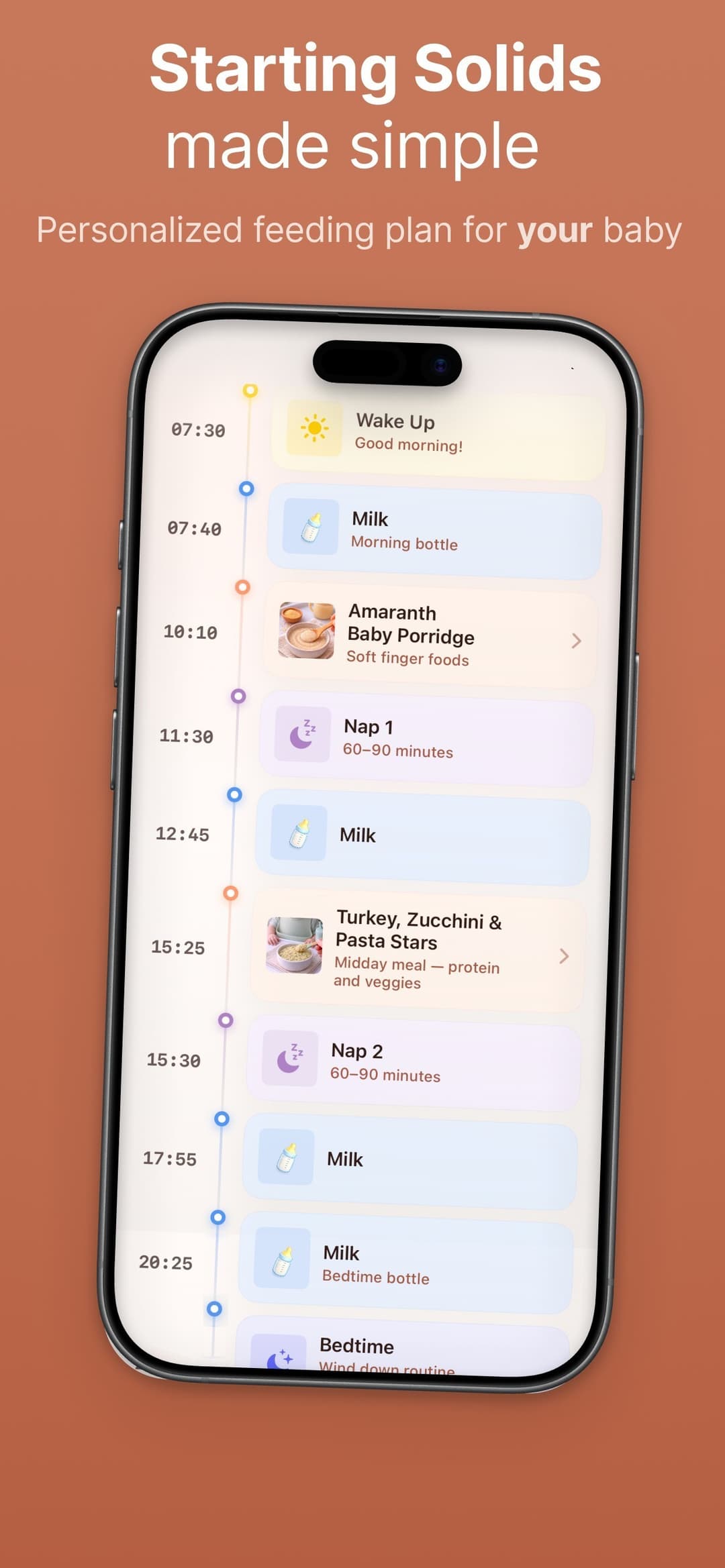
Plan Iron Rich Meals with Nibli
Planning balanced meals for babies can feel overwhelming.
Nibli helps simplify starting solids by generating a personalized feeding plan based on your baby's age.
Inside the app you can:
- •discover baby-safe recipes
- •see balanced daily feeding schedules
- •learn how to prepare foods safely
- •track foods your baby has tried
Recipes in the app help parents include iron-rich foods regularly. Learn how to cut food for baby-led weaning so you can safely prepare meat, lentils, and other iron sources.
What If My Baby Refuses Iron-Rich Foods?
Iron-rich foods can be harder to introduce - meat is dense and lentils have unfamiliar texture. Persist; here's how.
My baby spits out meat. What can I try?
Slow-cook beef or chicken thigh until it falls apart, then mix into purée or oatmeal so the texture is familiar. Try meatballs (mix ground meat with grated apple or zucchini for moisture), or mince finely into pasta sauce. Most babies need 8–15 exposures.
My baby is breastfed and we're avoiding cereal. Is iron a problem?
Possibly. Breastfed babies are at higher iron deficiency risk than formula-fed babies. Make sure other iron-rich foods (meat, lentils, beans, tofu, fortified cereal) appear daily. Talk to your pediatrician about checking iron levels at 9–12 months.
We're vegetarian. How do I make sure my baby gets enough iron?
Offer plant iron at every meal: lentils, beans, chickpeas, tofu, fortified cereal, eggs (if eaten), and dark greens. Always pair with vitamin C (citrus, kiwi, strawberry, bell pepper, tomato). Avoid serving with dairy, which blocks absorption.
Should I give iron drops?
Only on a pediatrician's advice. Healthy term babies meeting iron needs through food don't need supplements. Premature babies, low birthweight babies, and babies with confirmed deficiency may benefit. Iron drops can stain teeth - use a syringe at the back of the mouth.
How long does it take to fix iron deficiency?
Mild deficiency typically improves within 4–6 weeks of consistent iron-rich meals plus vitamin C. Severe deficiency usually needs iron drops alongside diet changes, with rechecks every 1–3 months until levels normalize.
Are baby-led weaning babies more at risk?
Not inherently - but BLW makes iron tracking trickier because babies pick what they eat. Focus on putting iron-rich foods on every plate: meat strips, soft beans, fortified cereal fingers, soft scrambled egg. Iron-rich finger foods at every meal is the goal.
Start Your Baby's Feeding Journey with Confidence
Nibli gives parents a clear feeding plan with simple recipes and guidance for starting solids.
Try Nibli today to discover new baby meals and build healthy eating habits.
verifiedSources & References
This guide is informed by current guidelines from leading health organizations:
Frequently Asked Questions
What foods are highest in iron for babies?
The highest iron foods for babies include beef, chicken liver, lentils, beans, iron-fortified infant cereal, eggs, tofu, spinach, and sardines. Animal sources (heme iron) are absorbed 2-3 times more easily than plant sources. Pair plant-based iron with vitamin C foods to boost absorption.
How do babies get enough iron after 6 months?
Iron stores from pregnancy run low around 6 months, so iron-rich solids become essential. Aim to include an iron source at every meal - meat, fish, eggs, lentils, beans, fortified cereal, or dark leafy greens. Pair with vitamin C foods (citrus, kiwi, tomatoes, strawberries) to boost absorption.
Are eggs high in iron for babies?
Eggs provide modest iron (about 1 mg per large egg, mostly in the yolk) plus protein, choline, and B12. They're a useful contributor when offered 2-3 times a week alongside stronger sources like meat or fortified cereal. Cook eggs fully and serve in baby-safe shapes.
How much iron does a baby need per day?
Babies 7-12 months need 11 mg of iron per day (US RDA). Breastfed babies are at higher risk of deficiency than formula-fed babies, since formula is iron-fortified. Aim to include iron-rich foods at 2-3 meals per day.
What is the difference between heme and non-heme iron?
Heme iron comes from animal foods (meat, fish, poultry) and is absorbed at 15-35%. Non-heme iron comes from plants (lentils, beans, spinach, fortified cereal) and is absorbed at only 2-20%. Adding vitamin C or animal protein to plant iron meals dramatically increases absorption.
How can I tell if my baby is iron deficient?
Iron deficiency is often symptomless early on. Later signs include pale skin, fatigue, irritability, poor appetite, and slowed growth. Pediatricians screen for iron deficiency around 9-12 months. If you are worried, ask for a hemoglobin test.
Are iron-fortified baby cereals necessary?
Iron-fortified cereal is one easy way to deliver iron, especially for breastfed babies. It is not the only option - meat, lentils, beans, and eggs are equally effective. Avoid rice cereal as the only choice; opt for oat or multi-grain to limit arsenic exposure.
Can vegetarian babies get enough iron?
Yes, with planning. Offer iron-rich plant foods at every meal - lentils, chickpeas, tofu, beans, fortified cereals, eggs, and dark greens. Always pair with vitamin C (oranges, kiwi, bell peppers) to boost absorption. Avoid serving with milk or tea, which block iron absorption.
Does spinach really have a lot of iron for babies?
Spinach contains iron (about 0.8 mg per ¼ cup cooked) but the iron is non-heme and comes with oxalates that limit absorption. It's still a useful contributor when paired with vitamin C. Don't rely on spinach as the main iron source.
Should I avoid milk if my baby is iron deficient?
Cow's milk and excess dairy block iron absorption and should not replace breast milk or formula before 12 months. After 12 months, limit cow's milk to 16-20 oz/day, since over-consumption is a leading cause of toddler iron deficiency. Offer iron-rich foods first, dairy second.
Best iron foods for baby led weaning (BLW)?
Soft strips of cooked beef, chicken thigh, or salmon; lentil patties; mashed beans on toast; iron-fortified oat cereal mixed with fruit purée; soft scrambled eggs; tofu strips. All cut to age-appropriate finger food shapes.
What if my baby refuses iron-rich foods?
Try mixing iron-rich foods with familiar flavors - beef purée with sweet potato, lentils with mashed banana, fortified cereal with fruit. Offer repeatedly (it can take 8-15 exposures). Use vitamin C foods alongside to boost absorption. Pediatricians may recommend supplements if intake stays low.
Are iron supplements safe for babies?
Iron supplements should only be given on a pediatrician's advice. Healthy term babies usually meet needs through diet from 6 months. Premature or low-birthweight babies may need supplements from earlier. Iron drops can stain teeth - use a syringe at the back of the mouth.
How quickly does iron deficiency improve with diet changes?
Mild iron deficiency typically improves within 4-6 weeks of consistent iron-rich meals plus vitamin C pairing. Pediatricians recheck levels after 1-3 months of diet changes or supplementation. Severe deficiency may need iron drops alongside dietary improvements.
Can babies have too much iron?
From food alone, no - babies excrete excess. Too much from supplements can be toxic, so only give iron drops on a pediatrician's advice. Keep iron supplements out of reach: accidental overdose is a leading cause of poisoning in young children.
Iron-rich finger foods for 9-12 month olds?
Soft meatballs (beef or turkey), chicken thigh strips, salmon fingers, lentil pancakes, hummus on toast, soft tofu cubes, scrambled eggs, fortified oat squares. These deliver iron, protein, and texture practice.