How to Cut Banana for Baby
Last updated May 2026
Simple and safe ways to serve banana when starting solids.
Bananas are one of the easiest first foods for babies.
They are naturally soft, sweet, and easy for babies to mash with their gums.
When serving banana for baby-led weaning, the most important thing is preparing it in shapes that babies can hold safely and explore independently.
Why Banana Is Perfect for Babies
Bananas are naturally soft and packed with nutrients that support healthy development.
They provide carbohydrates for energy, potassium for muscle function, and fiber for digestion.
Because bananas require almost no preparation, they are often recommended as one of the first foods babies try when starting solids.
Best Ways to Cut Banana for Babies
Bananas can be served in several baby-friendly shapes depending on your baby's age and feeding skills.
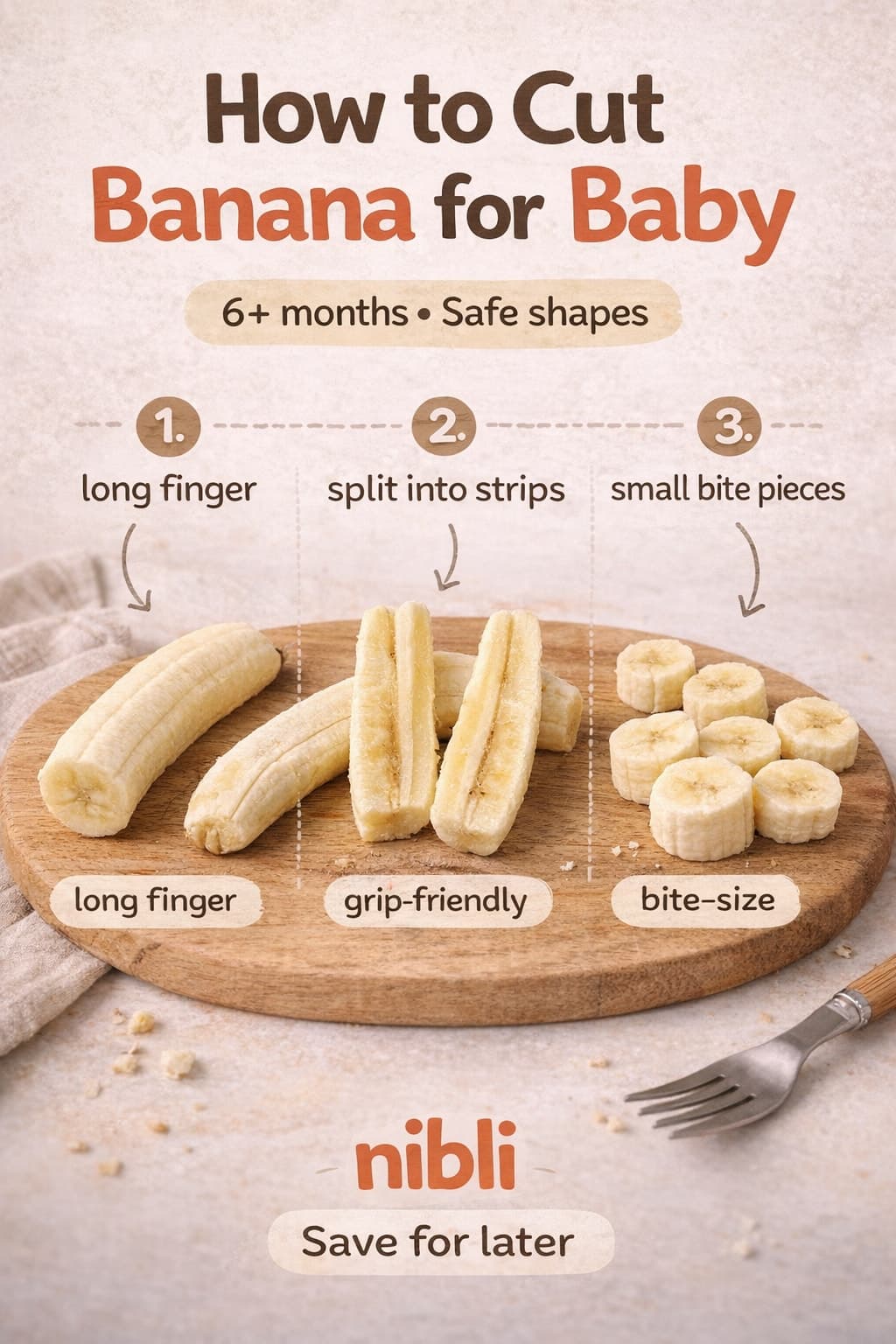
Banana Spears
Cut banana lengthwise into long spears. These shapes are easiest for babies around six months to hold and explore. Perfect for banana for 6 month old babies.
Banana with Peel Handle
Another simple method is peeling part of the banana while leaving some peel on the bottom. The peel acts as a natural handle that babies can grip easily.
Banana Cubes
For older babies developing their pincer grasp, bananas can be cut into small cubes. Avoid round slices which can pose a choking risk.
Simple Banana Meal Ideas for Babies
- • Banana with oatmeal
- • Banana pancakes
- • Banana with yogurt
- • Banana and avocado mash
- • Banana slices with nut butter on toast
Bananas pair well with many baby foods. See our BLW breakfast ideas and baby-led weaning food list for more combinations.
How to Serve Banana at Different Ages
6 months
Large banana spears or partially peeled banana with a handle.
8–9 months
Smaller banana chunks or slices as babies develop pincer grasp.
10–12 months
Bite-sized banana pieces mixed into meals or enjoyed as a snack.
Learn How to Prepare Baby Foods with Nibli
Preparing foods safely can feel confusing when starting solids.
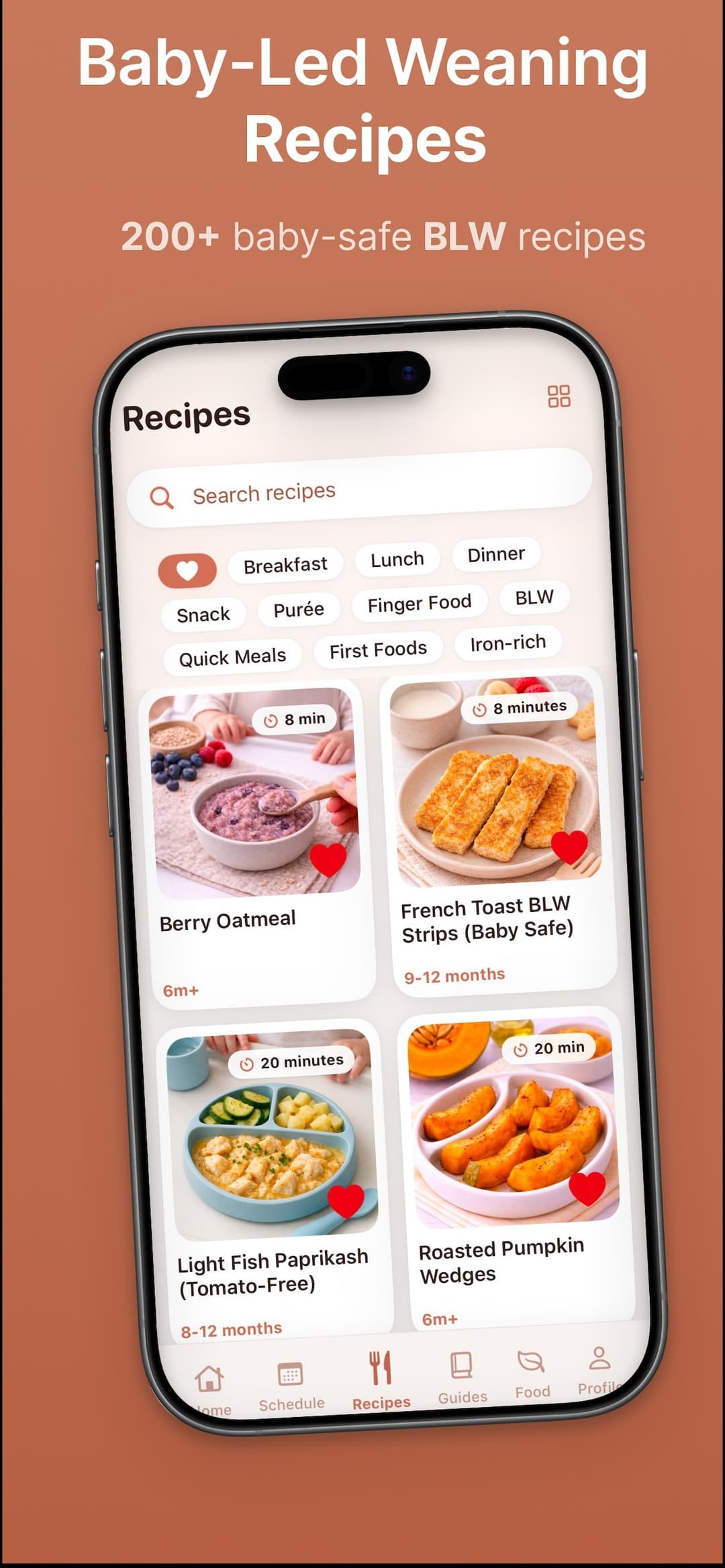
Nibli includes visual cutting guides that show exactly how to prepare foods like banana for babies at different stages.
Inside the app you can:
- •see how to cut foods safely
- •explore baby-safe recipes
- •follow a personalized feeding schedule
- •track foods your baby has tried
See also how to cut avocado for baby and the full how to cut food for baby-led weaning guide.
Frequently Asked Questions
When can babies eat banana?
Most babies can eat banana from around 6 months when starting solids. Always serve it in a safe size and texture appropriate for your baby's age and development.
How do you cut banana for baby led weaning?
For babies around 6 months, banana should be cut into large pieces that are easy to grasp with their hands. As babies develop their chewing skills, the pieces can gradually become smaller.
How to serve banana baby led weaning?
For BLW, cut banana into strips or wedges that babies can hold. The texture should be soft enough to mash easily with gentle pressure.
Can babies choke on banana?
banana can become a choking hazard if served in small round or hard pieces. Cutting it into larger soft pieces appropriate for baby-led weaning helps reduce choking risk.
How should banana be served to a 6 month old?
At around 6 months, banana should be served in large soft pieces that babies can hold with their hands. See our full ingredient guide.
Is banana safe for baby led weaning?
banana can be included in baby-led weaning when cut into safe shapes and soft textures that babies can hold and gum. Browse recipes with this ingredient.
How small should banana be cut for older babies?
From around 9 months, babies typically use a pincer grasp, so banana can be cut into smaller pea-sized pieces. Continue ensuring pieces are soft enough to mash and watch for any choking risk shapes.
Should banana be cooked or raw for babies?
Cook banana until easily mashable when raw textures are too firm for babies to gum. Soft ripe fruits are often offered raw, while firmer foods are typically steamed, roasted, or boiled until tender.
Can banana be served as a finger food at 6 months?
Yes, banana can be a 6-month finger food when cut into long graspable strips and softened to a mashable texture. Always supervise meals and adjust shape as your baby's chewing skills develop.
How to cut banana for a 7 month old?
At 7 months babies still use a palmar (whole-hand) grasp. Cut banana into long strips about 2-3 inches long and finger-width thick, with part sticking out of the fist for chewing. Soft enough to mash between two fingers.
How to cut banana for an 8 month old?
At 8 months babies are refining grasp and may begin pincering. Continue offering banana in 2-inch strips alongside a few small pea-sized pieces to practice the pincer grasp. Cooked until easily mashable.
How to cut banana for a 9 month old?
At 9 months most babies have developed the pincer grasp. Cut banana into pea-sized pieces (about ½ inch / 1.5 cm) for self-feeding practice. Continue avoiding round, hard, or sticky shapes; soft enough to mash with mild pressure.
How to cut banana for a 10 month old?
At 10 months babies eat a wider variety of textures. Offer banana in pea-sized pieces or small bite-sized cubes (½ inch / 1.5 cm). They can manage slightly firmer textures, but pieces should still mash easily.
How to cut banana for a 12 month old?
From 12 months babies eat in pieces about ½ inch (1.5 cm). Round foods (grapes, cherry tomatoes) must still be quartered until age 4 due to choking risk. Soft enough to chew without much molar work.
Can babies eat banana for breakfast?
Yes - banana can be part of a balanced baby breakfast when prepared in baby-safe shapes. Pair with a protein, healthy fat, or whole grain (eggs, yogurt, oats, nut butter on toast) for a complete morning meal.
verifiedSources & References
This guide is informed by current guidelines from leading health organizations:
Make Starting Solids Simple
Nibli helps parents confidently introduce new foods with simple recipes, feeding schedules, and cutting guides.
Try Nibli today to start planning your baby's meals.