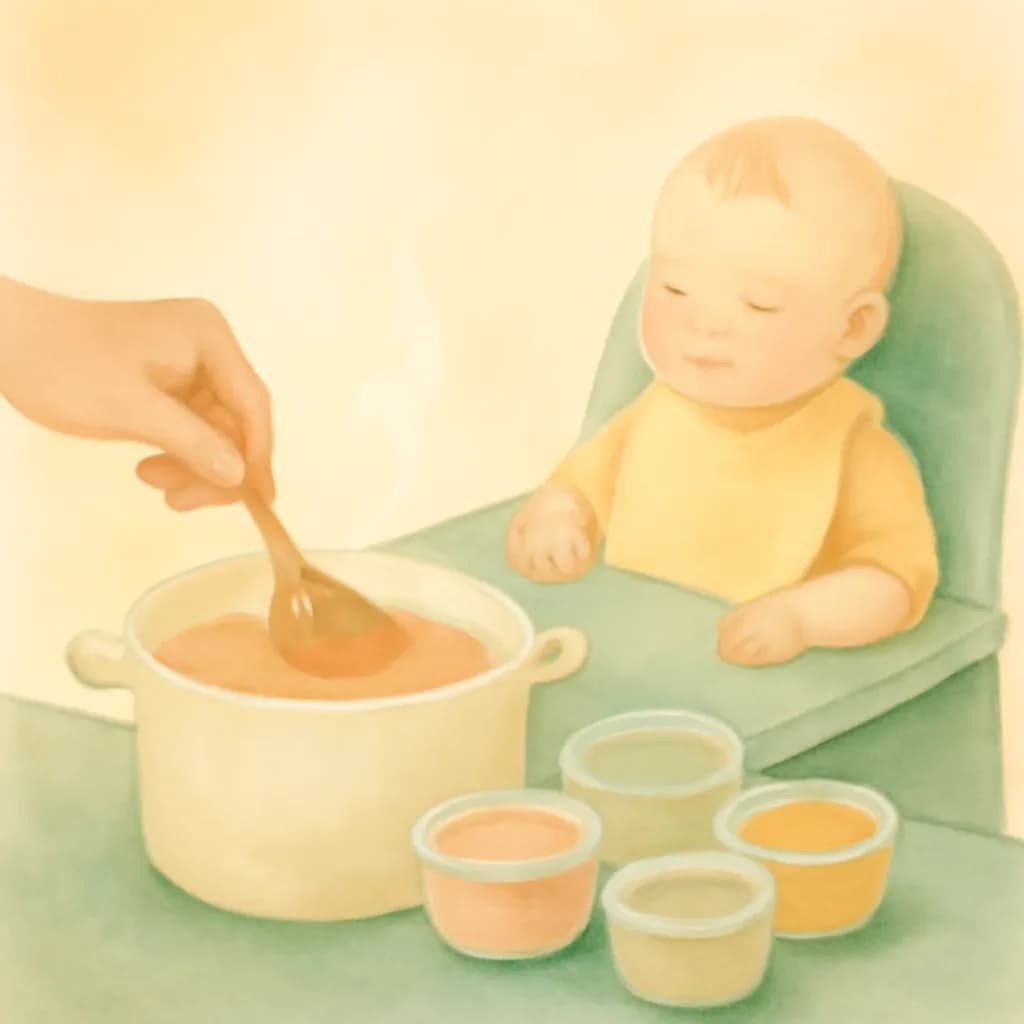
Why batch cooking helps your baby’s feeding journey
Preparing multiple meals ahead of time supports consistent nutrition and helps you stay on track with baby-led weaning. It also reduces mealtime pressure and allows you to focus on enjoying feeding moments with your baby.
Batch cooking encourages variety and texture exploration, key for developing your baby’s eating skills and preferences.
What makes batch cooking work for baby-led weaning
- Planning 3-5 base recipes ensures a balanced mix of vegetables, proteins, and grains.
- Prepping ingredients in advance (chopping, peeling) speeds up cooking and keeps things organized.
- Cooking in stages - steaming vegetables, roasting meats, simmering grains - maximizes efficiency and flavor.
- Portioning into ice cube trays and silicone freezer bags allows easy thawing and portion control.
- Labeling with dates helps track freshness and food safety.
- Mix-and-match combinations create meal variety, supporting your baby’s interest and acceptance of new foods.
When to seek medical advice during baby feeding
- Your baby consistently refuses to eat or shows signs of distress during feeding.
- Signs of allergic reaction such as rash, swelling, vomiting, or difficulty breathing.
- Persistent vomiting or diarrhea lasting more than 24 hours.
- Unusual lethargy, dehydration, or failure to gain weight.
Steps to batch cook baby meals successfully
Create a simple meal plan
Choose 3-5 base recipes that include a variety of vegetables, proteins, and grains suitable for baby-led weaning.
Prep ingredients ahead
Wash, peel, and chop vegetables and proteins to save time during cooking.
Cook in stages
Steam vegetables, roast meats, and simmer grains separately to maintain texture and flavor.
Portion and store
Divide cooked foods into ice cube trays or silicone freezer bags, then label each with the date.
Defrost safely
Thaw meals overnight in the fridge or gently warm in a saucepan before serving. Re-blend if a smoother texture is needed.
Mix and match
Combine different base portions to keep mealtime interesting and encourage your baby’s exploration of flavors and textures.
Frequently asked questions
How long can I store batch-cooked baby food in the freezer?
Batch-cooked baby food is best used within 1 to 3 months to maintain freshness and nutritional quality. Always label portions with the date to keep track.
Can I use batch-cooked meals for baby-led weaning?
Yes, batch-cooked meals can be adapted for baby-led weaning by preparing textures suitable for self-feeding and combining different bases for variety.
What tools do I need for batch cooking baby food?
Essential tools include a blender for purees, ice cube trays for portioning, silicone freezer bags for storage, and sticker labels to mark dates.
How do I safely defrost batch-cooked baby meals?
Defrost meals overnight in the fridge or warm gently in a saucepan. Avoid microwaving to preserve texture and nutrients. Re-blend if needed for smoother consistency.
Is it okay to mix different batch-cooked foods when serving?
Mixing different base portions is a great way to offer variety and encourage your baby’s interest in new flavors and textures.
How quickly should I freeze cooked baby food?
Cooked baby food should be cooled quickly and frozen within 2 hours to ensure food safety and reduce bacterial growth.
Can batch cooking help with picky eating?
Batch cooking allows you to offer a range of flavors and textures consistently, which can support your baby’s willingness to try new foods and reduce picky eating tendencies.
Get your baby's personalized feeding plan
A daily feeding schedule, 350+ age-matched recipes, allergen tracking and cutting guides - all tailored to your baby's age in the Nibli app.
verifiedSources & References
This guide is informed by current guidelines from leading health organizations: