When can babies eat mushrooms?
Babies can start eating common mushrooms like button, cremini, and shiitake from around 6 months of age, in line with complementary feeding guidelines from health authorities such as the NHS and AAP.
It is important to avoid raw mushrooms as they are hard to digest and may carry bacteria. Wild or foraged mushrooms should also be avoided due to the risk of toxicity.
How to serve mushrooms safely
Always cook mushrooms thoroughly until soft to make them easier to digest and to reduce any bacterial risk. Avoid serving raw mushrooms to babies.
Cut mushrooms into small, manageable pieces to minimise choking hazards. Introduce mushrooms gradually and observe for any adverse reactions.
Nutritional benefits for babies
- 💚Source of vitamin D, which supports bone health and immune function.
- 💚Contains B vitamins important for energy metabolism and brain development.
- 💚Provides dietary fibre to support healthy digestion.
- 💚Low in calories and fat, making them a nutritious addition to a balanced diet.
Safety considerations
- ✓Never serve raw mushrooms to babies due to digestion and bacterial risks.
- ✓Avoid wild or foraged mushrooms as they can be toxic.
- ✓Cut mushrooms into small pieces to prevent choking.
- ✓Although mushroom allergy is rare, introduce gradually and watch for any allergic reactions.
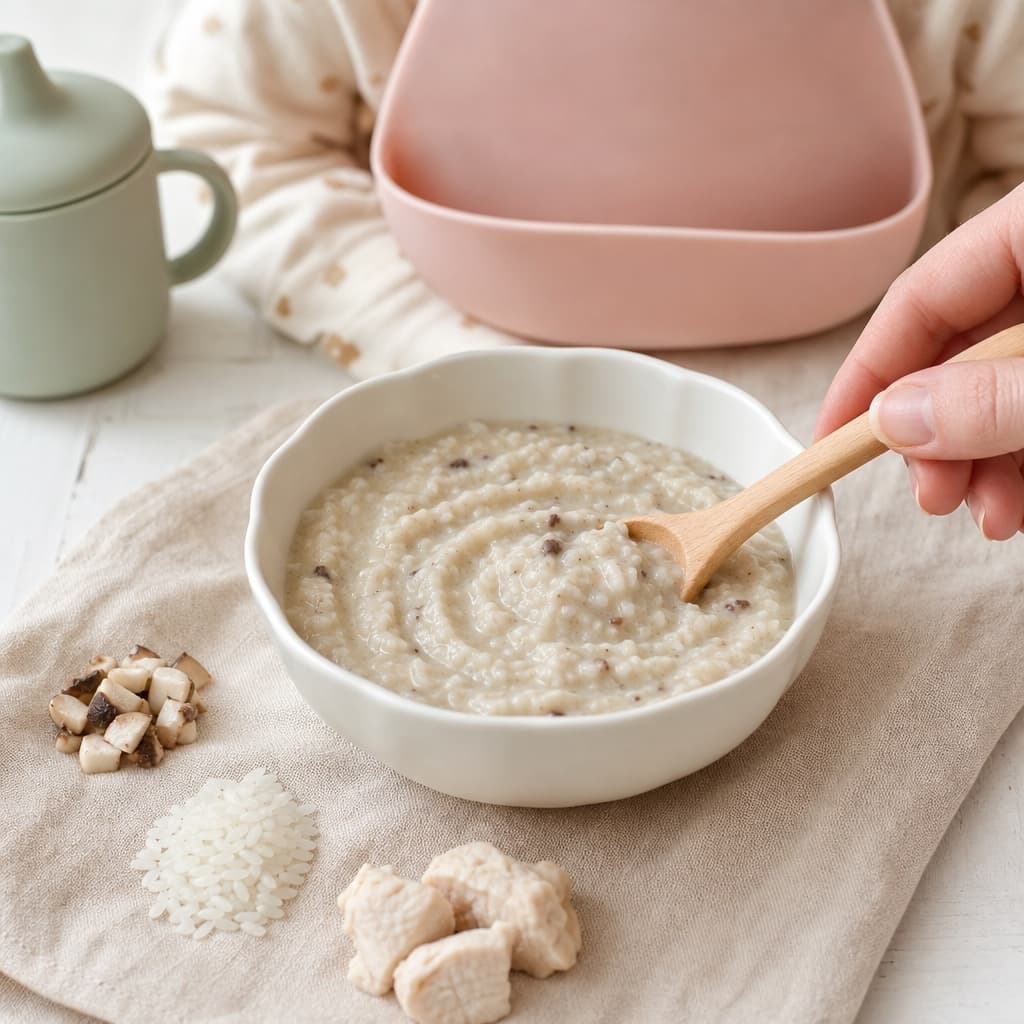
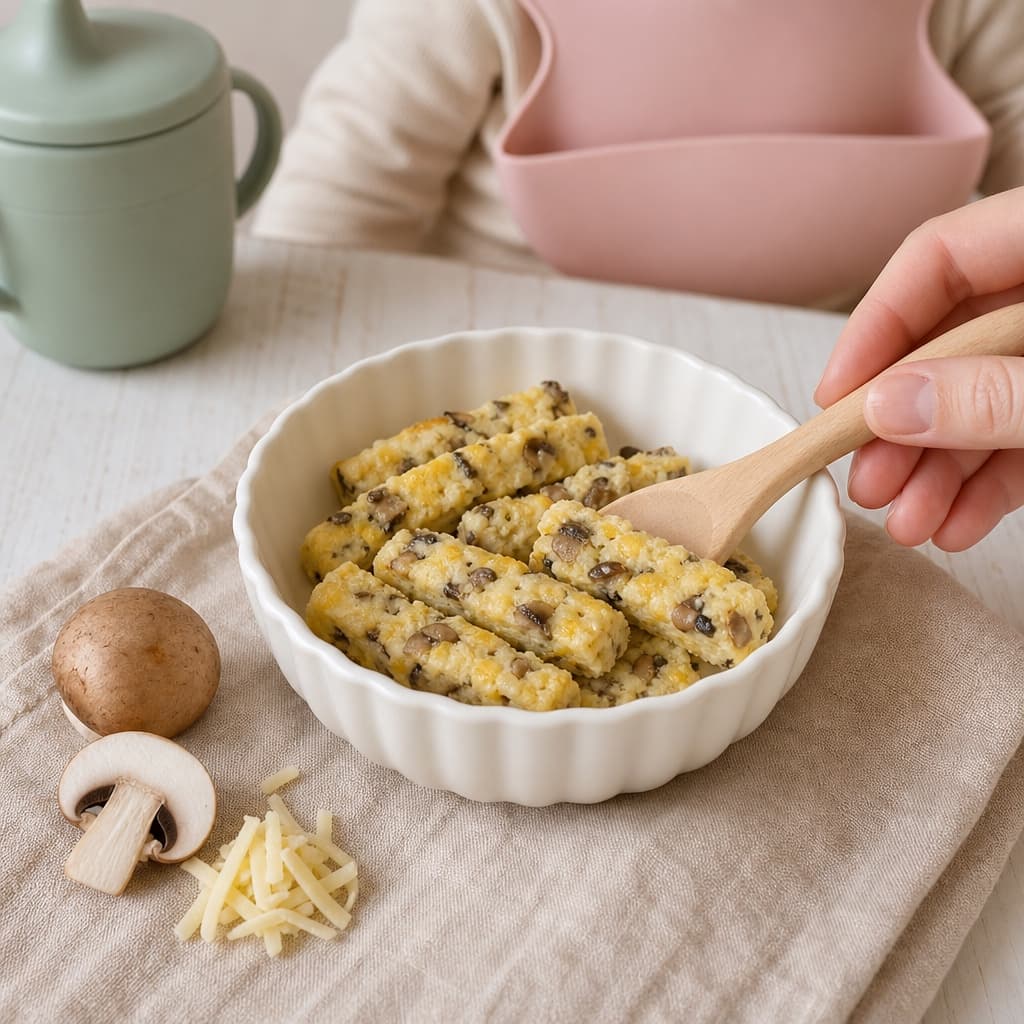
Recipes with mushrooms for babies
Frequently asked questions
Are mushrooms safe for babies to eat?
Yes, cooked common mushrooms such as button, cremini, and shiitake are safe for babies from around 6 months. They should always be cooked thoroughly and cut into small pieces to reduce choking risk.
Why shouldn’t babies eat raw mushrooms?
Raw mushrooms are hard for babies to digest and may carry bacteria that could cause illness. Cooking mushrooms thoroughly makes them safer and easier to digest.
Can mushroom allergies affect babies?
Mushroom allergies are rare in babies. However, it is important to introduce mushrooms gradually and monitor for any signs of allergic reaction, such as rash, swelling, or breathing difficulties.
What types of mushrooms are safe for babies?
Common cultivated mushrooms like button, cremini, and shiitake are safe when cooked. Avoid wild or foraged mushrooms due to the risk of toxicity.
How should mushrooms be prepared for babies?
Mushrooms should be cooked thoroughly until soft and cut into small pieces to prevent choking. Avoid adding salt or strong seasonings.
What nutritional benefits do mushrooms provide to babies?
Mushrooms provide vitamin D, B vitamins, and dietary fibre, supporting bone health, energy metabolism, and digestion in babies.
Can mushrooms be part of a baby’s first foods?
Yes, mushrooms can be introduced as part of complementary feeding from 6 months, alongside other soft, cooked vegetables and foods recommended by health authorities.
Get recipes + a feeding plan for your baby
Save this food to your baby's list, get age-appropriate recipes and follow a personalized feeding schedule - 350+ baby-safe meals in the app.
verifiedSources & References
This guide is informed by current guidelines from leading health organizations: