When can babies eat peanut butter?
Babies can have smooth, thinned peanut butter from around 6 months. Major guidelines (AAP, NIAID, and LEAP study results) recommend introducing peanut early - around 4-6 months for high-risk babies (severe eczema or egg allergy) and 6 months for most others - because early exposure significantly reduces the chance of developing a peanut allergy.
Peanut is a top-9 allergen. Introduce it on its own at home, in the morning, when you can watch your baby for 2 hours. Start with a small amount on the tip of a spoon.
How to serve peanut butter safely
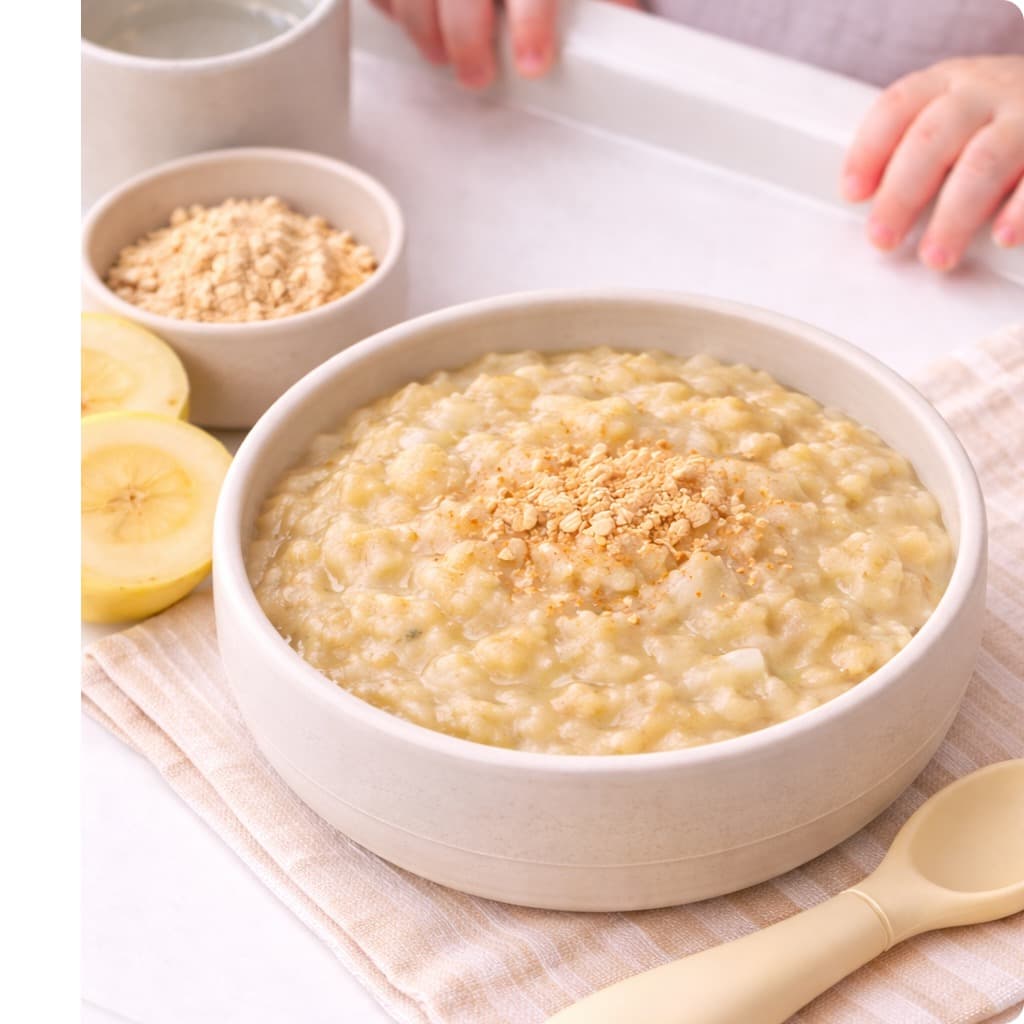
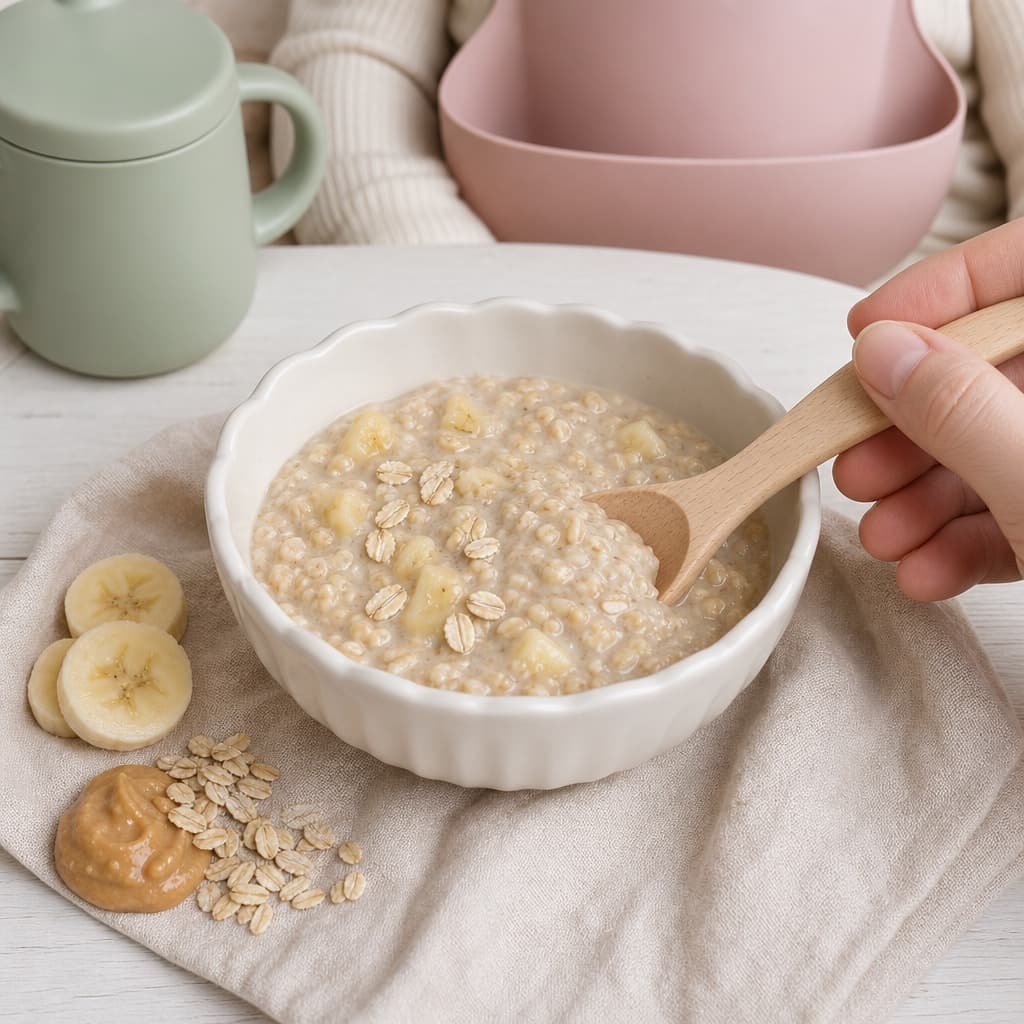
Always thin peanut butter before serving: stir 1-2 teaspoons into warm water, breast milk, or formula until smooth and runny; mix into yogurt, oatmeal, or fruit puree; or thinly spread on a soft pancake or toast strip.
Never give a thick blob, spoonful straight from the jar, or whole peanuts to babies and toddlers under 4 - peanut butter's sticky texture is a choking risk. Choose smooth, unsalted, unsweetened natural peanut butter (no xylitol, no honey before 12 months).
Nutritional benefits for babies
- 💚Plant-based protein supports muscle and tissue growth.
- 💚Healthy fats (mono- and polyunsaturated) support brain development.
- 💚Vitamin E, niacin, magnesium, and B vitamins support overall growth.
- 💚Energy-dense - useful for babies and toddlers with smaller appetites.
Safety considerations
- ✓Peanut is a top-9 allergen - introduce on its own and watch for 2 hours after the first taste.
- ✓NEVER give thick peanut butter or whole peanuts to babies and toddlers under 4 (choking risk).
- ✓Always thin with breast milk, formula, water, yogurt, or stir into oatmeal/puree.
- ✓Choose smooth, unsalted, unsweetened natural peanut butter; avoid honey-roasted (no honey under 12 months).
- ✓Watch for early-phase reactions: hives, swelling, vomiting, wheezing - call 911 for severe symptoms.
Peanut butter recipes for babies
Frequently asked questions
When should I introduce peanut butter?
For most babies, around 6 months alongside other solids. For high-risk babies (severe eczema and/or egg allergy), the AAP recommends introducing peanut at 4-6 months after a pediatrician evaluation - early introduction substantially reduces peanut allergy risk according to the LEAP study.
Is peanut butter a choking hazard?
Yes - thick peanut butter is one of the top choking foods for under-4s because it sticks to the airway. Always thin it with liquid, mix into yogurt or puree, or thinly spread on a soft food. Never offer a spoonful of plain peanut butter or whole peanuts to babies, toddlers, or young children.
How do I dilute peanut butter for a baby?
Stir 1-2 teaspoons of smooth peanut butter into 1-2 tablespoons of warm water, breast milk, or formula until runny. You can also mix into yogurt, mashed banana, oatmeal, or fruit puree. The final texture should pour or scoop easily, not be sticky or thick.
What are signs of a peanut allergy?
Reactions usually appear within minutes to 2 hours: hives, swelling of the lips/face, vomiting, wheezing, persistent cough, or sudden lethargy. Severe reactions (anaphylaxis) include trouble breathing or sudden weakness - call 911 immediately. Mild redness only on the face after rubbing food in is usually contact irritation, not allergy.
How often should I serve peanut once introduced?
After your baby tolerates peanut butter, the LEAP protocol recommends offering 6-7 grams of peanut protein per week (about 2 teaspoons of peanut butter), spread across 2-3 servings. Regular exposure is what maintains tolerance - sporadic eating is less protective.
Can I use other peanut products like puffs or powder?
Yes - peanut puffs (like Bamba) and peanut powder mixed into food are both used in pediatric peanut introduction protocols. Puffs are easy for older babies to self-feed once they have a pincer grasp and are softer in texture, but watch for crumbs in younger babies.
What if there's a peanut allergy in the family?
Family history is a risk factor but isn't a reason to delay - delaying actually increases allergy risk. Talk to your pediatrician or an allergist; they may recommend a supervised first introduction or skin/blood testing for higher-risk babies before peanut at home.
Track allergens + plan your baby's meals
Introduce the top-9 allergens on a safe schedule, then get age-matched recipes and a daily feeding plan built around your baby - all in the Nibli app.
verifiedSources & References
This guide is informed by current guidelines from leading health organizations: