When can babies have raisins?
From around 12 months, you can offer raisins that are soaked until soft and then finely chopped. Before 12 months, avoid whole dried fruit because it is a high choking risk and very sticky. Instead, use the flavor safely in foods, like a small amount of raisin puree or simmered raisins blended into porridge or yogurt.
WHO advises starting complementary foods around 6 months, building variety and iron-rich options. Raisins are not a first food due to choking and dental concerns, but after the first year they can be used sparingly in meals. The NHS also advises serving dried fruit with meals, not as between-meal snacks, to help protect teeth.
How to serve raisins safely
12 to 18 months: Soak raisins in warm water 5 to 10 minutes until they mash easily with your fingers, then finely chop into pea-sized bits and mix into oatmeal, yogurt, pancakes, or meatballs. Use the squish test and keep portions small, about 1 tablespoon chopped, and always serve while your child is seated and supervised.
18 to 24 months and beyond: Continue soaked, finely chopped, pea-sized pieces mixed into meals. Avoid giving whole raisins until chewing is very reliable. Follow age-appropriate cutting guidance: before a strong pincer grasp, offer foods in soft 4 to 5 cm finger-length pieces rather than small bits; after the pincer grasp is established, use pea-sized pieces; always use the squish test so food smashes easily between fingers.
Raisin nutrition for babies and toddlers
- 💚Provides fiber to support healthy digestion and softer stools.
- 💚Supplies potassium for fluid balance and muscle function.
- 💚Contains small amounts of non-heme iron that support normal development.
- 💚Rich in polyphenol antioxidants from grapes.
- 💚Offers quick energy from natural sugars when included in balanced meals.
Safety tips to keep in mind
- ✓Choking risk: Raisins are small and sticky. Wait until about 12 months, then serve only soaked and finely chopped. Keep your child seated, go slowly, and avoid serving in the car or stroller. The AAP highlights small, sticky foods as choking hazards for young children.
- ✓Cut and texture guidance: Before a reliable pincer grasp, stick to soft 4 to 5 cm finger-length foods, not tiny bits. After the pincer grasp, offer pea-sized pieces. Use the squish test so food smashes easily between fingers.
- ✓Dental care: Dried fruit is sugary and sticky. The NHS advises offering dried fruit with meals, not as snacks, and brushing teeth twice daily with fluoride toothpaste.
- ✓Allergy and sensitivity: Grape allergy is uncommon but possible. Some raisins contain sulfites, which can trigger reactions in sensitive individuals. Choose unsulfured raisins and introduce a small amount first, watching for hives, vomiting, wheeze, or facial swelling.
- ✓Quality and prep: Choose plain raisins with no added sugar or coatings. Soak 5 to 10 minutes to soften, then finely chop. Offer small portions with sips of water.
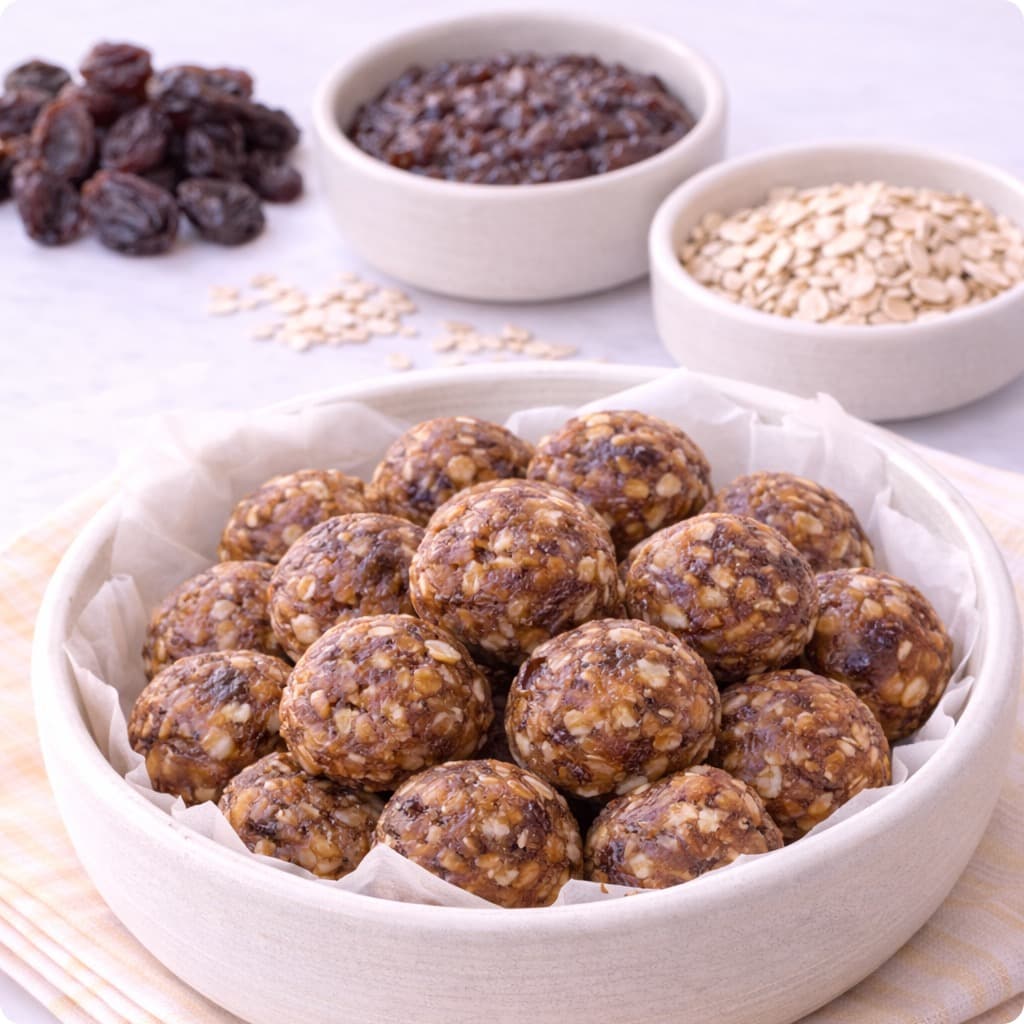
Baby-friendly raisin recipes
Raisin safety FAQs
Are raisins a choking hazard for babies?
Yes. Raisins are small and sticky, which increases choking risk. For babies 12 months and older, soak to soften and then finely chop into pea-sized pieces mixed into other foods. Keep your child seated and supervised. The AAP flags small, round, and sticky foods as choking hazards for young children.
When can my baby have whole raisins?
Wait until chewing skills are very reliable. Many families continue soaking and finely chopping through toddlerhood. Whole raisins should be avoided until your child consistently bites, chews, and swallows safely. When in doubt, keep soaking and chopping.
How do I soften raisins for my 1-year-old?
Cover raisins with warm water for 5 to 10 minutes, then drain, pat dry, and check with the squish test. Finely chop into pea-sized bits and mix into oatmeal, yogurt, muffins, or meatballs.
Do raisins help with constipation?
They can. Raisins contain fiber and sorbitol, which may help soften stools. Offer small portions with water and balanced meals that include other fiber-rich foods. If constipation persists, speak with your pediatrician.
Are golden raisins better than regular raisins for babies?
Nutrition is similar. Golden raisins are often treated with sulfites to preserve color, which may trigger reactions in sensitive individuals. For babies, choose plain, unsulfured raisins with no added sugar or coatings.
Are raisins bad for my child’s teeth?
Raisins are sugary and sticky, so they can contribute to tooth decay. The NHS advises serving dried fruit with meals, not as between-meal snacks. Brush twice daily with fluoride toothpaste and offer water with meals.
How much raisin is okay for a 1-year-old?
Start small, about 1 tablespoon of soaked, finely chopped raisins mixed into a meal. Watch how your child handles the texture and adjust. Focus on overall balanced meals rather than frequent dried fruit snacks.
Get recipes + a feeding plan for your baby
Save this food to your baby's list, get age-appropriate recipes and follow a personalized feeding schedule - 350+ baby-safe meals in the app.
verifiedSources & References
This guide is informed by current guidelines from leading health organizations: