What do you want to know?
Deep dive
Blueberries →Blueberries for babies: when to introduce, how to prepare and mash to avoid choking, antioxidant and vitamin benefits, allergy notes and easy puree or snack ideas.
Nutrition highlights
- Antioxidants (anthocyanins) - give blueberries their colour and support overall health.
- Vitamin C - supports the immune system and iron absorption.
- Fibre - supports healthy digestion.
- Vitamin K - supports bone health and blood clotting.
Safety quick tips
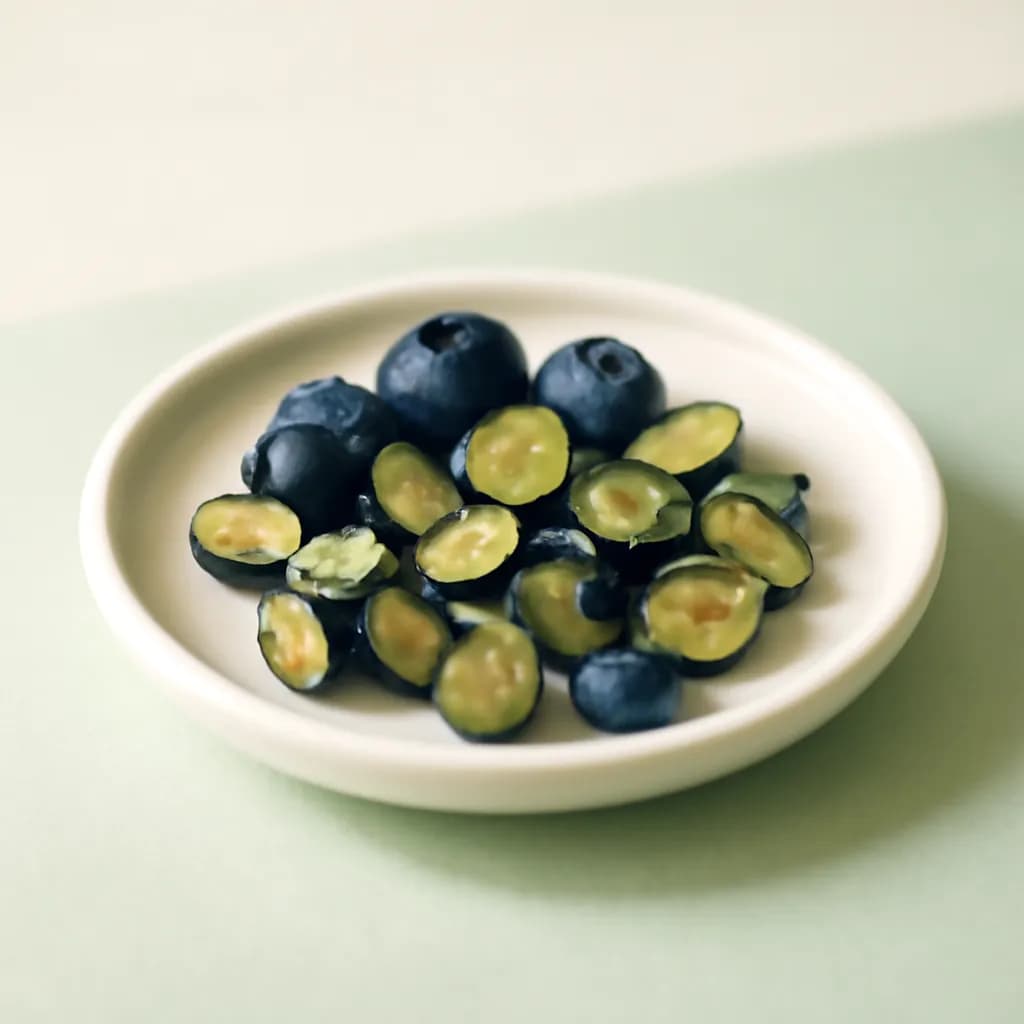
- Squash, halve, or quarter blueberries for babies and toddlers - whole blueberries are a choking hazard.
- Keep cutting them small until your child is chewing confidently.
- Squashing also breaks the tough skin, releasing the soft inside.
Common questions
Can babies eat Blueberries?
Yes. Babies can eat Blueberries starting around 6 months when they begin solid foods. It should be served in a safe texture and size for babies.
When can babies eat Blueberries?
Babies can eat Blueberries from around 6 months when starting solids. Babies can eat blueberries from around 6 months, once they're starting solids. Squash blueberries or cut them in half (large ones in quarters) for babies and young toddlers - whole blueberries are a choking hazard. Their skins can be tough; squashing breaks them and releases the soft inside.
Is Blueberries a choking hazard for babies?
Blueberries can be a choking hazard if served in unsafe shapes. Squash, halve, or quarter blueberries for babies and toddlers - whole blueberries are a choking hazard. Keep cutting them small until your child is chewing confidently. Squashing also breaks the tough skin, releasing the soft inside. Wash blueberries well before serving. Offer as part of a varied diet; their staining juice is harmless. Always supervise eating with your baby sat upright.
Is Blueberries a common allergen?
Blueberries is not typically a common allergen for babies. Many babies can try it from around 6 months as part of a varied diet.
How should Blueberries be served to babies?
6–9 months: Squash blueberries between your fingers before offering, or mash them into yoghurt, porridge, or purées. 6–9 months: Stir squashed blueberries into oatmeal or fold into baby pancakes. 9–12 months: Halved or quartered blueberries as the pincer grasp develops. 12+ months: Whole blueberries only once your child chews well; otherwise keep halving them.
What nutrients does Blueberries provide for babies?
Blueberries provides nutrients like fibre, vitamin C, iron that support babies' growth and development.
How long can I store Blueberries for babies?
Cook Blueberries to a safe temperature and store it in the refrigerator for up to 2 days, or freeze in single-serving portions for up to 1 month to preserve nutrients.
Should I buy organic Blueberries for my baby?
Organic Blueberries isn't strictly necessary for babies, but some families prefer to reduce pesticide exposure. Wash conventional produce thoroughly. Variety and freshness matter most.