What do you want to know?
Deep dive
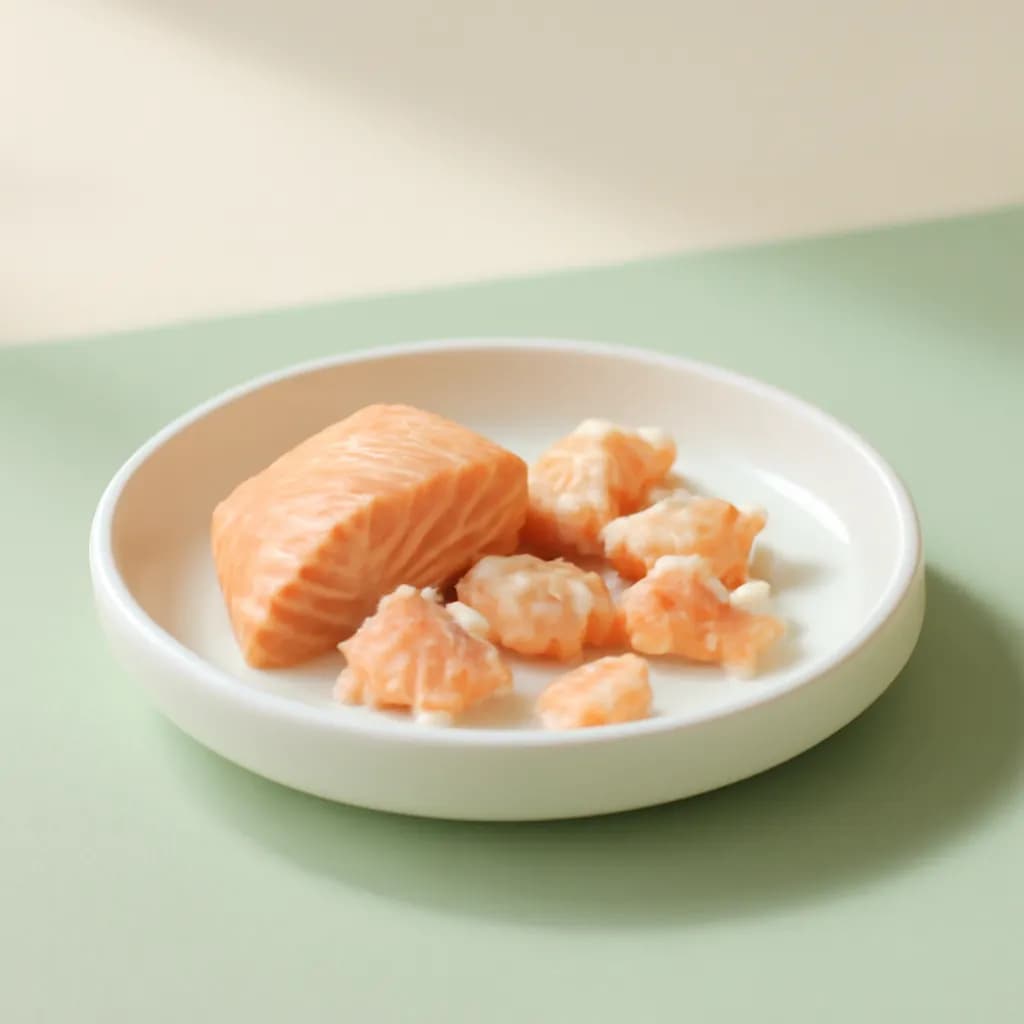
Salmon →Salmon for babies: when to introduce, low-mercury choices, cooking and flaking tips for safety, omega-3 benefits and easy recipes to boost baby brain nutrition.
Nutrition highlights
- Omega-3 fats (DHA/EPA) - support brain, nerve, and eye development.
- Protein - high-quality complete protein for growth, in a soft form.
- Vitamin D - supports bone development and immune health.
- Vitamin B12 - supports nerve function and red blood cells.
Safety quick tips
- Check very carefully for bones - remove every one before serving.
- Cook salmon thoroughly until it flakes; no raw salmon, and avoid smoked salmon (salty and a listeria risk).
- Introduce fish as an allergen - a small amount first, watching for any reaction.
Common questions
Can babies eat Salmon?
Yes. Babies can eat Salmon starting around 6 months when they begin solid foods. It should be served in a safe texture and size for babies.
When can babies eat Salmon?
Babies can eat Salmon from around 6 months when starting solids. Babies can eat well-cooked salmon from around 6 months, once they're starting solids. Fish is a common allergen - offer a small amount on its own, watch for any reaction, then include it regularly. Cook salmon thoroughly until it flakes, and check carefully for bones; oily fish like salmon is low in mercury and fine a couple of times a week.
Is Salmon a choking hazard for babies?
Salmon is generally safe for babies when prepared properly. 6–9 months: Poach, steam, or bake salmon until it flakes; flake it carefully (checking for bones) and offer soft flakes or mix into mash. 6–9 months: Blend cooked salmon into a smooth purée with potato and vegetables. 9–12 months: Soft salmon flakes or salmon-and-potato cakes as the pincer grasp develops. 12+ months: Salmon in fish pies, pasta, and family meals (low-salt); tinned salmon (low-salt, soft bones mashed) works too.
Is Salmon a common allergen?
Some babies may be allergic to Salmon. Introduce Salmon carefully when babies start solids and watch for reactions.
How should Salmon be served to babies?
6–9 months: Poach, steam, or bake salmon until it flakes; flake it carefully (checking for bones) and offer soft flakes or mix into mash. 6–9 months: Blend cooked salmon into a smooth purée with potato and vegetables. 9–12 months: Soft salmon flakes or salmon-and-potato cakes as the pincer grasp develops. 12+ months: Salmon in fish pies, pasta, and family meals (low-salt); tinned salmon (low-salt, soft bones mashed) works too.
What nutrients does Salmon provide for babies?
Salmon provides nutrients like protein that support babies' growth and development.
How long can I store Salmon for babies?
Cook Salmon to a safe temperature and store it in the refrigerator for up to 2 days, or freeze in single-serving portions for up to 1 month to preserve nutrients.
Should I buy organic Salmon for my baby?
Organic Salmon isn't strictly necessary for babies, but some families prefer to reduce pesticide exposure. Wash conventional produce thoroughly. Variety and freshness matter most.